
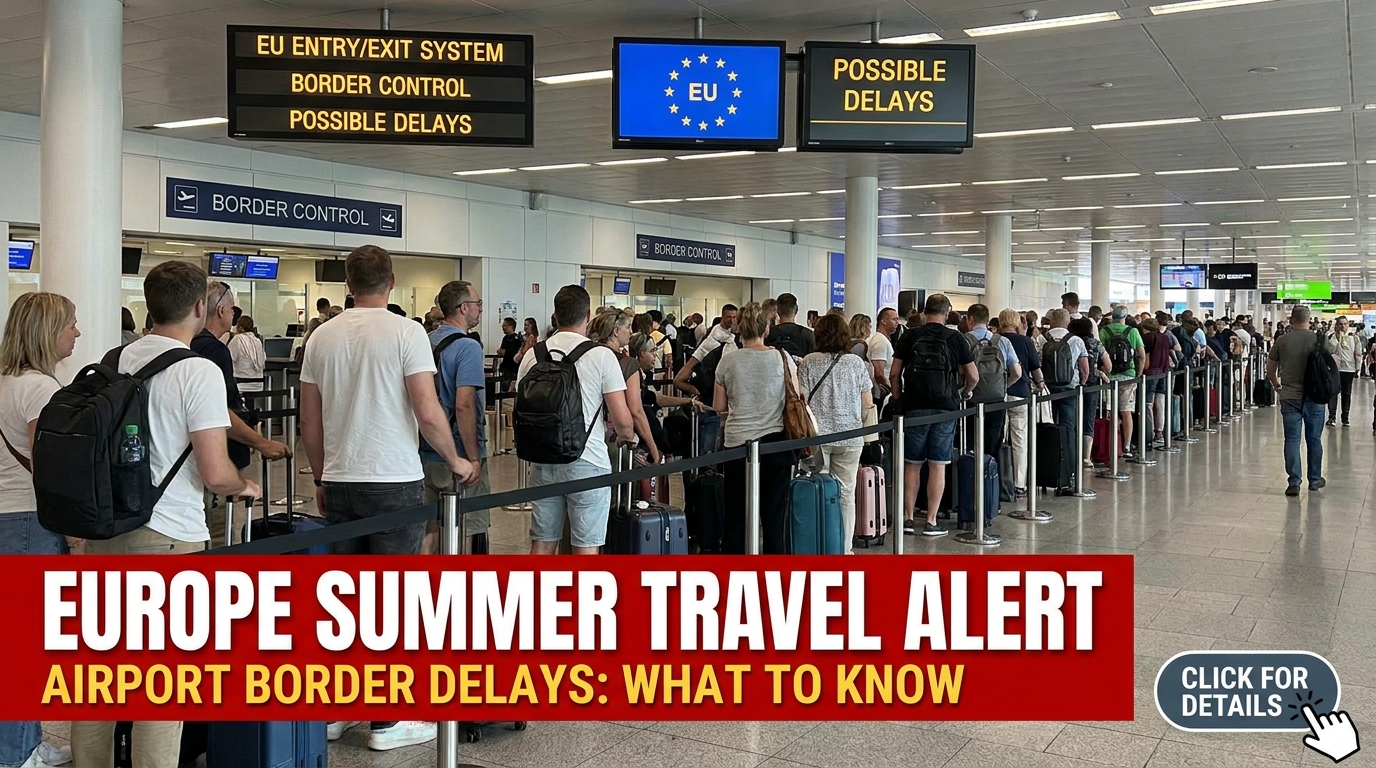


European airlines and airports are asking the European Commission to suspend parts of the new Entry/Exit System during the busiest summer travel weeks, warning that biometric border checks are already creating long airport queues, missed flights, and pressure on staff.
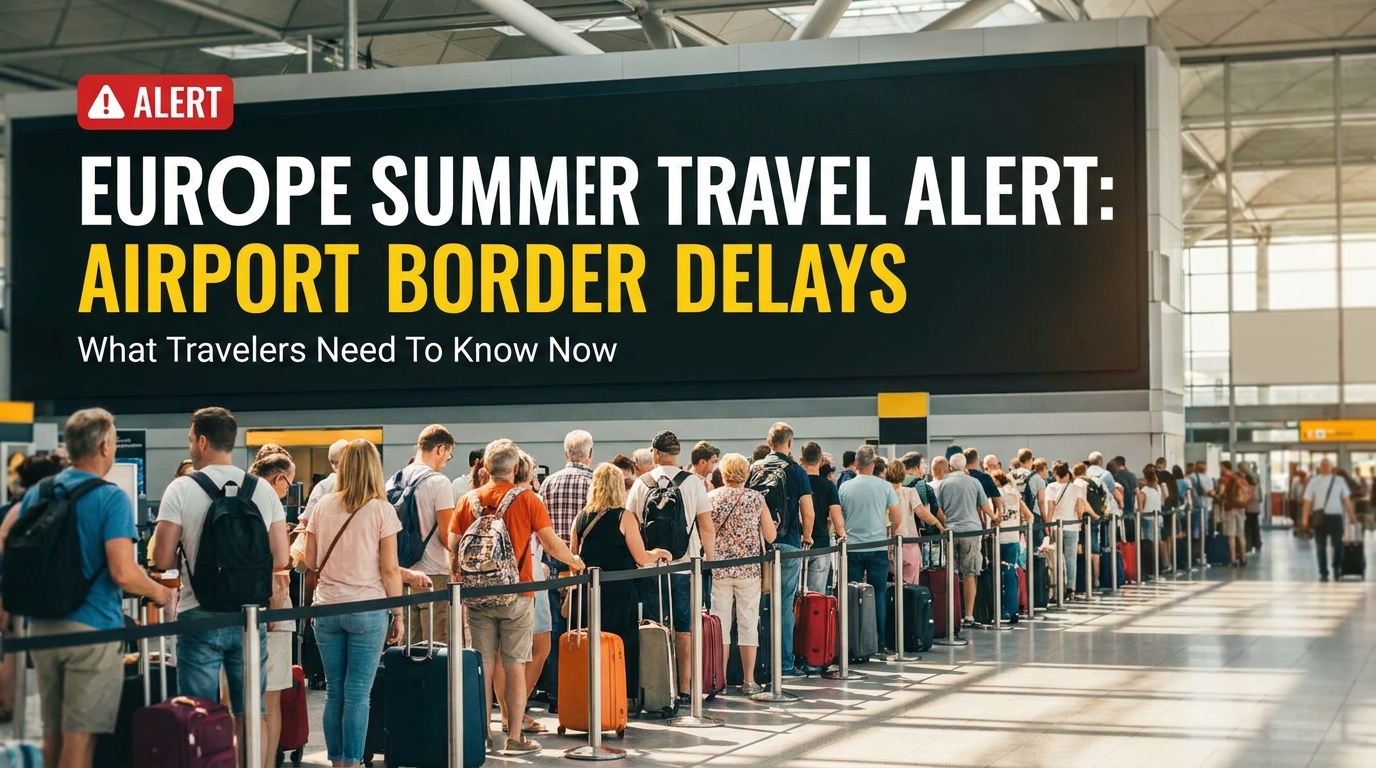
The issue matters most for non-EU travelers flying into the Schengen Area, especially during July and August. If you are visiting Europe this summer from the UK, US, Canada, Australia, India, or another non-EU country, your airport arrival could take longer than usual because of the EU’s new digital border system.
The EU says the Entry/Exit System, known as EES, improves border security by replacing passport stamps with digital records. But airports and airlines say the system is not yet working smoothly enough for peak summer traffic.
What Is The EU Entry/Exit System And Why Is It Causing Airport Delays?
The Entry/Exit System is the EU’s new digital border check for many non-EU travelers entering or leaving the Schengen Area. It records passport details, entry and exit dates, facial images, and fingerprints instead of relying on manual passport stamps.
According to the European Commission, EES began operating on October 12, 2025, across 29 European countries and became fully operational on April 10, 2026. The system records entries, exits, and refusals of entry for non-EU nationals coming for short stays.
That sounds simple on paper. In real airport life, it means a traveler who once walked to a passport booth with one stamp may now need to:
- Scan a passport.
- Provide a facial image.
- Give fingerprints where required.
- Wait for the border record to be created or verified.
- Answer normal border questions if asked.
The first trip under EES usually takes the longest. Once a traveler is already registered, later border checks should be faster, but airports say the early summer rollout is still creating bottlenecks.
Why Are Airlines And Airports Asking Europe To Suspend EES?
Airlines and airports want EES flexibility because border control queues are now reaching serious levels at some airports. In a July 1 open letter to European Commission President Ursula von der Leyen, ACI Europe, Airlines for Europe, and IATA said waiting times at border control had reached up to five hours during peak periods.
Their biggest concern is timing. July and August are Europe’s heaviest leisure travel months. The aviation groups said European airports are expected to handle about 40 million more passengers in July and August than in the previous two months.
That is the part travelers should not ignore. A system that may work on a quiet Tuesday morning can struggle badly when several packed flights land together from London, New York, Dubai, Delhi, Toronto, and Istanbul.
Which Travelers Are Most Likely To Be Affected By EES Delays?
Non-EU short-stay visitors are the main travelers affected by EES checks. This includes many tourists, business visitors, and family travelers entering the Schengen Area for trips of up to 90 days in any 180-day period.
You may face extra processing if you are:
| Traveler type | EES impact |
|---|---|
| UK tourist visiting Spain, France, Italy, Greece, or other Schengen countries | Likely affected |
| US, Canadian, Australian, or Indian traveler entering Schengen | Likely affected |
| Non-EU traveler on a short-stay Schengen visa | Likely affected |
| EU citizen | Not the main target of EES |
| Traveler with certain EU residence rights | May be exempt depending on status |
The important detail: EES is not a visa. It is a border recording system. You still need the correct visa or visa-free eligibility for your nationality.
Which Airports Are Already Being Watched Closely?
Several European airports are under attention because airlines say EES checks are already creating disruption. Ryanair listed Tenerife South, Palma, Alicante, Málaga, Milan Bergamo, Krakow, and Paris Beauvais among airports experiencing major disruption, according to The Guardian’s latest reporting.
TravelPulse also reported that Europe’s airlines and airports have made another call to suspend EES, citing industry warnings over airport pressure and summer passenger disruption.
This does not mean every traveler at those airports will face a huge delay. It means those airports are worth treating as “high-risk for queues” if you are flying in or out during peak holiday windows.
What Should Travelers Do Before Flying To Europe This Summer?
Travelers should build extra time into every Schengen airport plan, especially on arrival and when connecting. A tight connection that worked last summer may not be safe this summer if your first airport is now doing biometric registration.
Use this practical checklist:
- Avoid short connections after entering Schengen. Give yourself a longer gap if you land from outside Europe and connect onward.
- Keep hotel details ready. Border officers may ask where you are staying.
- Carry proof of return or onward travel. This is not new, but delays feel worse when documents are buried in your inbox.
- Keep travel insurance and funds proof accessible. You may not be asked, but being ready saves stress.
- Travel light on arrival if possible. Families with strollers, extra bags, or elderly relatives need more buffer time.
- Do not book a prepaid train or tour too close to landing. Give yourself breathing room after passport control.
A small real-life tip: when I plan a Europe arrival during peak season, I do not treat landing time as arrival time. If the plane lands at 10:00 a.m., I mentally treat the city arrival as noon or later. That simple mindset prevents bad bookings, missed trains, and expensive taxi decisions.
What Not To Do At European Border Control
Do not argue with airport staff or assume the airline can fix a border-control delay. Airlines may help with rebooking in some cases, but passport control is handled by border authorities, not airline gate agents.
Avoid these mistakes:
- Do not join a queue without checking signs. EES lanes, EU lanes, visa lanes, and family assistance lanes may be separate.
- Do not wait until the desk to find your hotel address. Have it ready before you reach the officer.
- Do not assume children move faster. Families often need more time, even when children have lighter biometric requirements.
- Do not schedule a same-day non-refundable activity immediately after landing.
- Do not ignore airline alerts. If your airline warns of airport congestion, treat it as real.
Why Europe Still Wants EES Despite The Delays
The EU wants EES because it gives border authorities a clearer digital record of who enters and leaves the Schengen Area. The European Commission says EES helps detect overstays, identity fraud, and security risks. In its March 2026 update, the Commission said the system had already registered more than 45 million border crossings, recorded more than 24,000 refusals of entry, and helped identify more than 600 people considered a security risk.
So the debate is not simply “security versus travel.” The real question is whether Europe can run stronger border checks without turning airport arrivals into hours-long queues.
Airports and airlines say they support the goal of EES but want a temporary pause when passenger volumes exceed border-control capacity. Their July letter asked the Commission to allow full suspension of EES procedures during July and August whenever airport conditions require it.
Will EES Be Suspended This Summer?
A full Europe-wide suspension has not been confirmed, but airlines and airports are pushing hard for more flexibility. The European Commission has said the system is operating with limited issues at most airports and has invited industry representatives to urgent talks, according to The Guardian.
For travelers, the safest assumption is simple: EES remains active unless your airport or airline says otherwise.
That means you should prepare for biometric checks, longer lines, and possible arrival delays, especially at busy leisure airports in Spain, Italy, France, Greece, and other high-volume summer destinations.
Bottom Line For Travelers
Europe’s new EES border system is now a real travel factor, not a future warning. It may improve security and reduce passport-stamp confusion over time, but summer 2026 is the stress test.
If you are flying into the Schengen Area, plan like this:
- Add extra time at passport control.
- Avoid risky onward connections.
- Keep documents ready.
- Watch airline and airport alerts before departure.
- Treat peak tourist airports as possible delay zones.
The smartest traveler this summer is not the one who panics. It is the one who lands prepared, leaves space in the schedule, and does not let a border queue ruin the first day of the trip.