
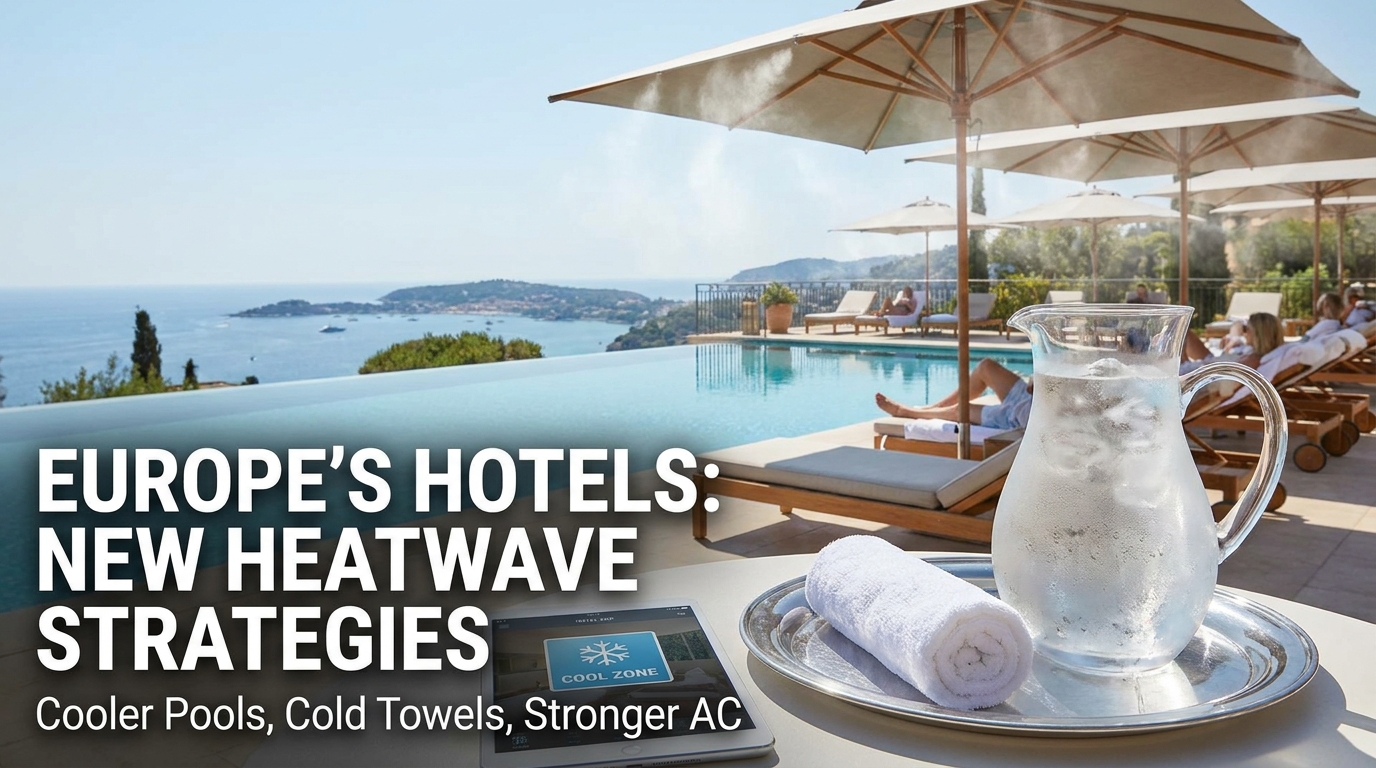


Europe’s hotels are no longer treating summer heat as a small inconvenience. From Paris to Venice, London and the Amalfi Coast, properties are changing guest routines with cooler pools, cold towels, lighter menus, earlier tours, indoor activities and stronger air-conditioning plans as heatwaves reshape how travelers book and enjoy summer trips.
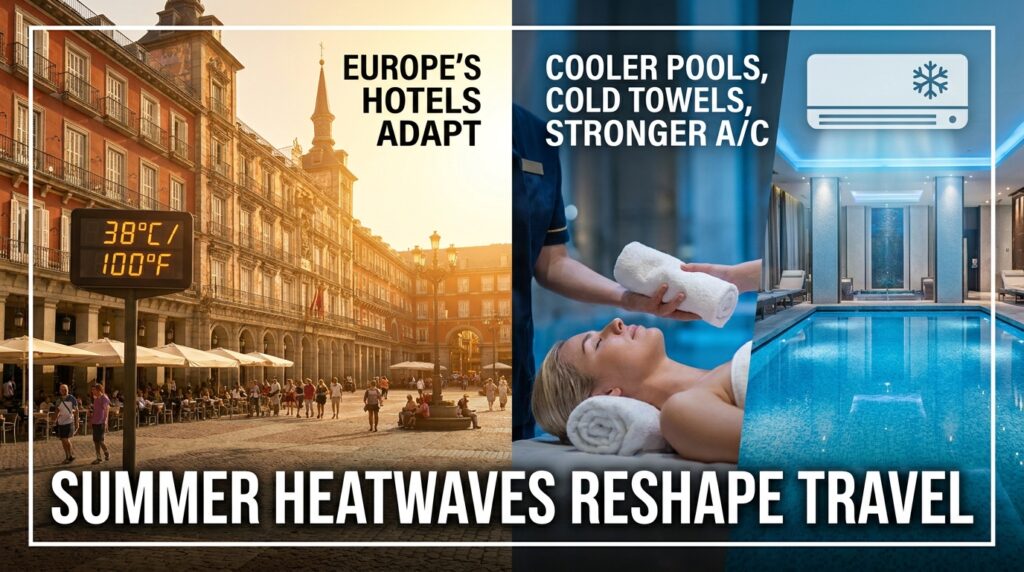
Travel Weekly reported that several European hotels are already adapting service in real time, while climate data shows why this is becoming a long-term travel issue, not just a bad-weather week. Europe is the world’s fastest-warming continent, and the 2025 European climate report found that at least 95% of Europe saw above-average annual temperatures.
Quick Answer: What Are Europe Hotels Doing During Heatwaves?
| Traveler concern | What hotels are changing | Smart traveler move |
|---|---|---|
| Rooms feel too hot | More focus on reliable A/C and closed curtains during housekeeping | Confirm in-room A/C, not just “climate control” |
| Outdoor tours feel unsafe | Morning visits and evening activities | Book museums early and outdoor walks before 10 a.m. |
| Pools feel warm | Some hotels are cooling pools with cold water | Ask whether the pool is shaded or cooled |
| Heavy meals feel uncomfortable | More salads, gelato, poke bowls and cold drinks | Eat lighter at lunch and save big meals for evening |
| Kids and older travelers struggle | More indoor programming and shaded areas | Choose hotels with lobby space, indoor dining and lifts |
Why Are European Hotels Changing So Fast?
Hotels are changing because summer heat now affects sleep, sightseeing, food choices and guest reviews. Travel Weekly cited hospitality experts saying air-conditioning investment is moving beyond luxury hotels and Southern Europe because guests now treat cooling as a basic comfort, especially international travelers.
This matches what travelers are already doing. In France, Reuters reported that residents booked hotels to escape overheated apartments during a severe heatwave, with Paris hitting a June record of 40.9°C. Some countryside hotels near Paris filled up even without A/C because thick stone walls, fans, pools and green surroundings felt cooler than city apartments.
Paris Hotels Are Using Cold Towels, Mists And Smarter Guest Timing
Paris hotels are helping guests cool down before they even ask. At Hotel Le Grand Mazarin, guests were offered chilled water, cold towels and facial mist sprays, while housekeeping teams closed curtains during room service to keep rooms from heating up.
That small curtain detail matters more than it sounds. A room with afternoon sun can feel fine at check-in and then become uncomfortable by 5 p.m. A smart traveler should do the same thing: close curtains before leaving for sightseeing, leave the room cool, and avoid opening windows during peak afternoon heat.
Also read – Europe Airport Border Checks Could Trigger Summer Travel Delays: What Travelers Need To Know Now
Are European Hotels Air-Conditioned? Always Check Before Booking
Not every European hotel has the same level of air conditioning, even in major cities. Travel Weekly reported that some guests in Normandy had to be moved from hotels without A/C during June’s extreme heat, showing that cooler regions can no longer be treated as “safe” from heat spikes.
Before booking, ask the hotel these exact questions:
- Does every guest room have in-room air conditioning?
- Can guests control the temperature inside the room?
- Is A/C available all day and night, or only during set hours?
- Are top-floor rooms hotter than lower-floor rooms?
- Does the hotel have shaded indoor areas if rooms are not ready?
The phrase to avoid is “naturally ventilated.” It can be lovely in spring. During a heatwave, it may mean fans and open windows.
Venice Hotels Are Cooling Pools And Moving Lunch Indoors
In Venice, hotel cooling is now part of the guest experience. At JW Marriott Venice Resort & Spa, the hotel added cold water to its pools after temperatures climbed past 95°F, because the pool no longer felt different from the air outside. The property also moved outdoor lunch service indoors during peak heat and offered more water across the resort.
This is the kind of detail travelers should look for in reviews. Do guests mention shade by the pool? Cold water stations? Indoor breakfast and lunch areas? A hotel can have a beautiful pool, but in a heatwave, shade and water temperature matter as much as the view.
Amalfi Coast Hotels Are Moving Experiences To Sunrise And Sunset
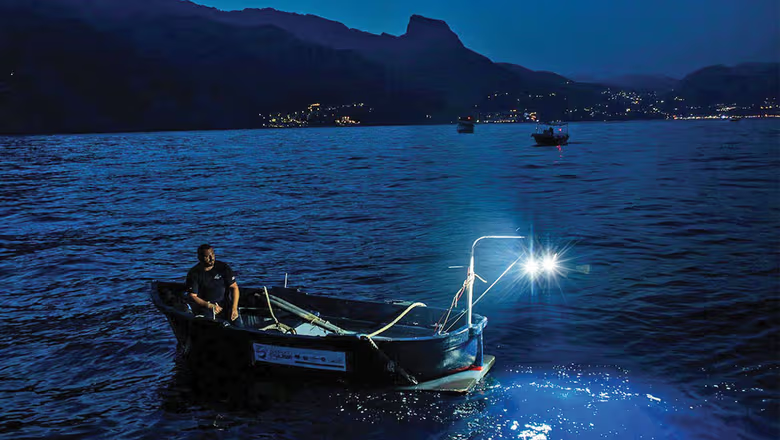
The smartest summer hotels are shifting activities away from midday. At Casa Angelina on Italy’s Amalfi Coast, staff are recommending sunrise wellness activities, morning boat trips, sunset cruises and even after-dark squid fishing with a local fisherman.
That is the right model for hot-weather travel in Europe:
- Morning: boat rides, walking tours, markets, viewpoints
- Midday: nap, spa, pool shade, indoor lunch
- Late afternoon: beach time, short walks, shopping
- Evening: cruises, local food tours, outdoor dining
A good Europe summer itinerary should now be built like a local’s day, not a checklist from 9 a.m. to 6 p.m.
London Hotels Are Turning Heat Relief Into Guest Service
London hotels are adding practical cooling touches that travelers actually remember. Hotel Cafe Royal introduced a lobby refreshment trolley with chilled water and coconut water, plus a “sun kit” with sunscreen and cooling facial wipes. The Londoner offers a complimentary ice cream trolley on especially hot days, while The Westin London City has seen lighter meals and indoor activities become more attractive.
This is not just a luxury trend. During the UK heatwave, The Guardian reported that searches using Booking.com’s air-conditioning filter tripled in Great Britain from June 1, and some hotels saw more guests asking about A/C before booking.
How To Choose A Hotel In Europe During A Heatwave
Choose the hotel that protects your energy, not just your budget. A cheaper room can become expensive if you sleep badly, cancel tours or spend afternoons searching for air-conditioned cafes.
Use this heat-smart hotel checklist:
| Must-have | Why it matters |
|---|---|
| Real in-room A/C | Sleep is the first thing heat ruins |
| Shaded pool or indoor spa | Midday outdoor pools can feel punishing |
| Restaurant with indoor seating | You need a cool place to reset |
| Flexible concierge support | Good hotels can move tours earlier |
| Lower-floor room option | Top-floor rooms can trap heat |
| Nearby metro or taxi access | Long walks with luggage feel harder in heat |
What Should Travelers Do If Europe Heat Disrupts Their Trip?
Travelers should adjust the day early instead of waiting until they feel unwell. The CDC advises travelers to stay cool, stay hydrated and recognize heat-related symptoms such as thirst, heavy sweating, headache, dizziness, confusion and nausea.
Use this simple heat plan:
- Move outdoor sightseeing to the morning.
- Book lunch indoors between 1 p.m. and 3 p.m.
- Carry electrolytes or salty snacks with water.
- Use taxis for short but exposed routes.
- Stop immediately if dizziness, nausea or confusion starts.
- Ask the hotel to help rebook tours instead of forcing the plan.
Bottom Line: Europe Summer Travel Now Needs A Cooling Strategy
The best Europe hotels in summer are the ones that help guests manage heat without losing the joy of the trip. Cold towels, cooled pools and ice cream trolleys sound small, but they solve a real traveler problem: staying comfortable enough to enjoy the destination.
The bigger lesson is clear. Europe summer travel is still worth it, but the old plan of walking all day, eating heavy lunches outside and assuming the room will be cool no longer works. Book for sleep, shade, water, timing and flexibility. That is what turns a heatwave trip from stressful into manageable.