
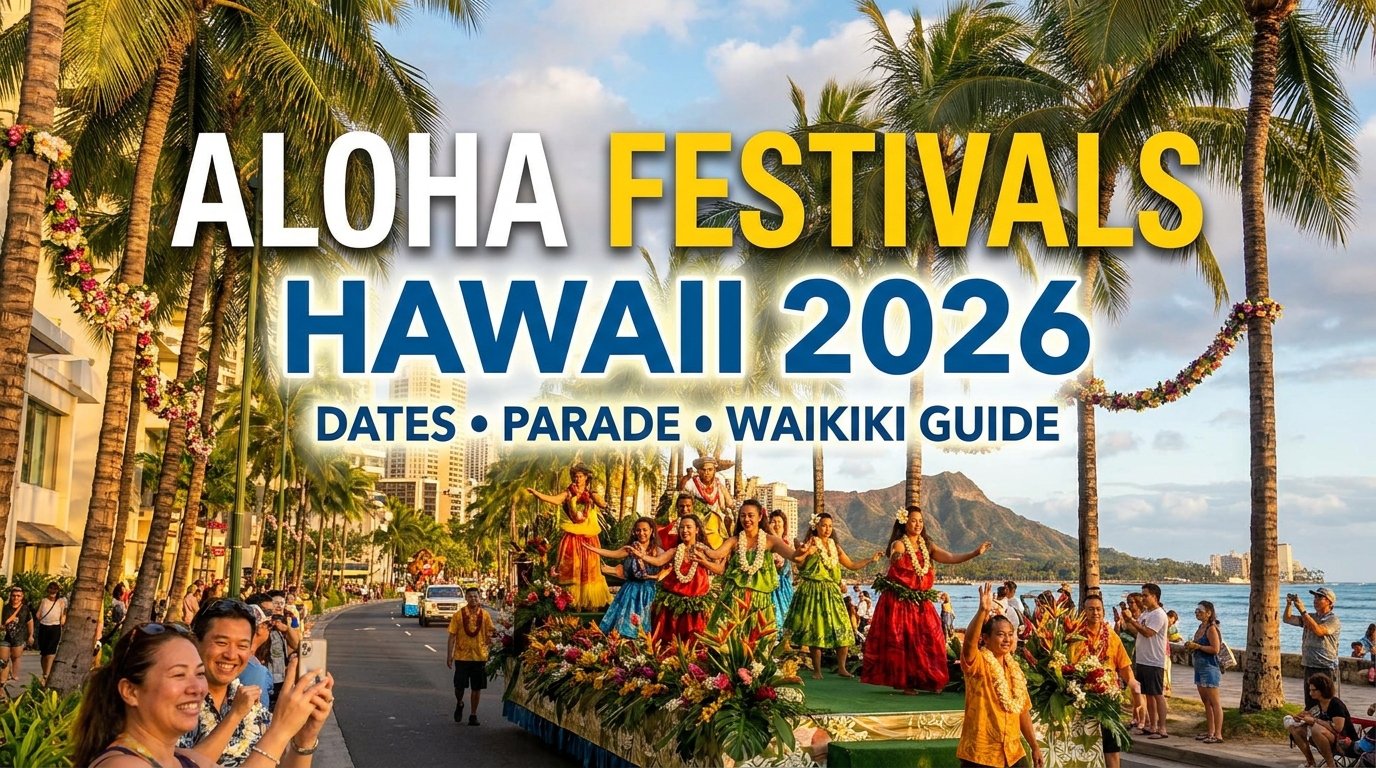


Aloha Festivals Hawaii celebrates its 80th anniversary in September 2026 with three major cultural events in Waikīkī: the Royal Court ceremony on September 5, the Waikīkī Hoʻolauleʻa on September 19 and the Floral Parade on September 26. The month-long celebration brings Hawaiian music, hula, traditional ceremony, local food, artisans, flower-covered floats and pāʻū riders to central Honolulu.
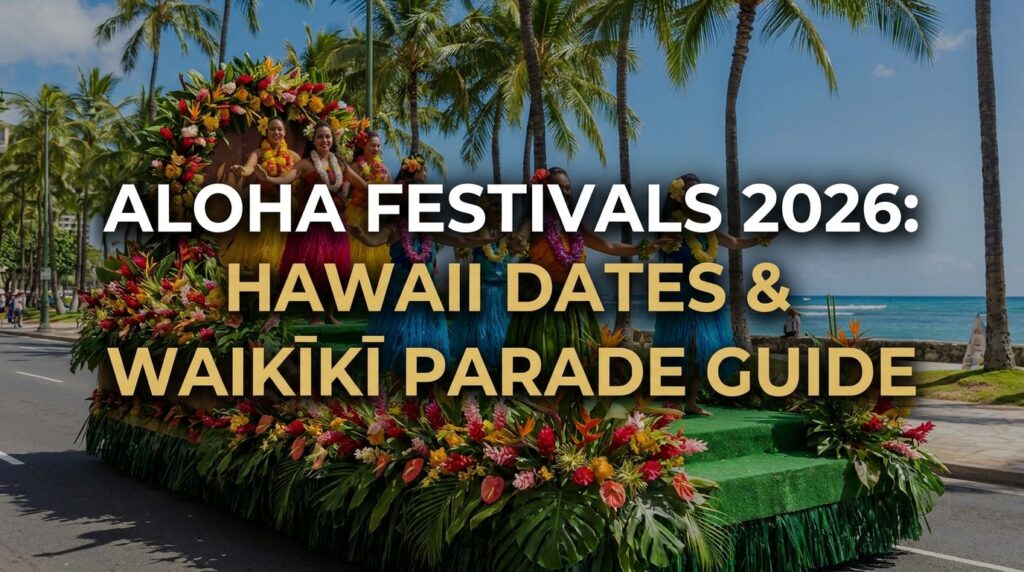
This is not simply another Waikīkī street fair. Aloha Festivals began as Aloha Week in 1946 and remains Hawaiʻi’s longest-running cultural festival. The 2026 theme, “80 Years of Aloha: Our Culture, Our Stories, Celebrating Our Island Home,” recognizes the people and traditions that have sustained the event across eight decades.
For visitors, the most useful strategy is to choose the event that matches the experience they want. Attend the Royal Court ceremony for cultural protocol, the Hoʻolauleʻa for food and evening entertainment, or the Floral Parade for the most visual and family-friendly finale.
Aloha Festivals Hawaii 2026 dates and locations
| Aloha Festivals event | Date and time | Location | Best for |
|---|---|---|---|
| Royal Court Investiture and Opening Ceremony | September 5, 4–6 p.m. | Helumoa Gardens and Royal Hawaiian Center | Hawaiian history, ceremony and hula |
| 72nd Waikīkī Hoʻolauleʻa | September 19, 6–10 p.m.; vendors from 4 p.m. | Kalākaua Avenue | Food, crafts, music and nightlife |
| 78th Floral Parade | September 26, 9 a.m.–noon | Ala Moana Park to Kapiʻolani Park | Families, photography and traditional pāʻū riders |
The organizers’ main event page currently lists the Hoʻolauleʻa ending at 9:30 p.m., while its dedicated event page gives an ending time of 10 p.m. Visitors should check the latest Aloha Festivals schedule shortly before attending.
What are Aloha Festivals in Hawaii?
Aloha Festivals is a September celebration of Hawaiian culture held through three signature events on Oʻahu. Its stated mission is to foster the aloha spirit by perpetuating Hawaiian culture and celebrating the customs and traditions of Hawaii.
The events bring together:
- Hālau hula, or hula schools
- Hawaiian musicians and chanters
- Cultural practitioners
- Pāʻū riders on horseback
- Local food vendors
- Artisans and craft makers
- Community groups and volunteers
- Members of the ceremonial Royal Court
Visitors should approach the celebrations as cultural events first and entertainment second. That means watching ceremonies without talking over chants, keeping pathways clear for performers and asking before photographing someone at close range.
Also read – Lollapalooza Chicago 2026: Lineup, Dates, Tickets and Festival Guide
What happens at the Aloha Festivals Royal Court ceremony?
The Royal Court Investiture introduces the festival’s ceremonial court through protocol, regalia, chant, hula and pageantry. It takes place on September 5 at Helumoa Gardens at The Royal Hawaiian, followed by an opening ceremony at the Royal Grove in Royal Hawaiian Center.
The Royal Court represents Hawaiʻi’s aliʻi, or ruling chiefs. Court members wear regalia associated with people of high rank, connecting the modern celebration with the history and protocols of the Hawaiian Kingdom.
This is the best event for travelers who want more than a colorful spectacle. Arrive early enough to understand the setting, listen closely to introductions and avoid treating the investiture like a staged hotel show.
Practical Royal Court ceremony tips
Arrive 30 to 45 minutes early because viewing space around the ceremony area is limited.
Use these simple steps:
- Wear neat, comfortable clothing suited to an outdoor cultural ceremony.
- Silence your phone before chants and formal presentations begin.
- Stand behind seated guests rather than blocking their view for photographs.
- Remain until the ceremony clearly concludes.
- Continue to the Royal Grove for the musical and hula performances.
A common visitor mistake is arriving halfway through and squeezing toward the front. The better experience comes from securing a respectful position early and observing the full sequence.
What happens at the Waikīkī Hoʻolauleʻa?
The Waikīkī Hoʻolauleʻa turns Kalākaua Avenue into Hawaiʻi’s largest annual block party on September 19. Vendors begin opening at 4 p.m., with the main program scheduled from 6 to 10 p.m. The event includes local food, artisan crafts, Hawaiian culture and multiple stages featuring musicians and award-winning hālau hula.
“Hoʻolauleʻa” describes a celebration or gathering. In practice, the evening feels like several neighborhood festivals joined along one long beachfront avenue.
Visitors move between stages, food booths and craft sellers while Waikīkī’s usual vehicle traffic disappears. The atmosphere becomes busiest after sunset, when hotel guests, residents and day visitors converge on the same section of Kalākaua Avenue.
How to enjoy the Waikīkī Hoʻolauleʻa without wasting the evening
Arrive between 4 and 5 p.m. to explore food and craft booths before the largest crowds appear.
A practical plan is:
- 4–5 p.m.: Browse vendors and identify food you want to try.
- 5–6 p.m.: Eat before queues become longest.
- 6–8 p.m.: Watch hula and live music across several stages.
- After 8 p.m.: Return to your favorite stage instead of trying to cover the entire street.
Do not buy the first meal you see simply because you are hungry. Walk one section first, compare portions and prices, then choose something that can be eaten easily while standing.
Carry a small amount of cash alongside a payment card. Vendors may use mobile payment systems, but dense crowds can slow connections and individual stalls may have different payment policies.
What food should you try at the Aloha Festivals street party?
Choose food prepared by local vendors rather than defaulting to familiar chain restaurants along Waikīkī. The Hoʻolauleʻa is designed to showcase island cuisine in one concentrated setting.
Offerings change, but useful choices may include:
- Plate lunches
- Kalua pork
- Huli-huli chicken
- Fresh poke
- Portuguese sausage
- Local-style noodles
- Shave ice
- Malasadas
- Hawaiian desserts
Look for booths with a short, focused menu. A vendor preparing two or three specialties often serves faster than one offering a long list of unrelated dishes.
Bring water, but avoid carrying a large beach bag. A compact crossbody bag leaves both hands available for food and makes it easier to move through narrow spaces.
What happens during the Aloha Festivals Floral Parade?
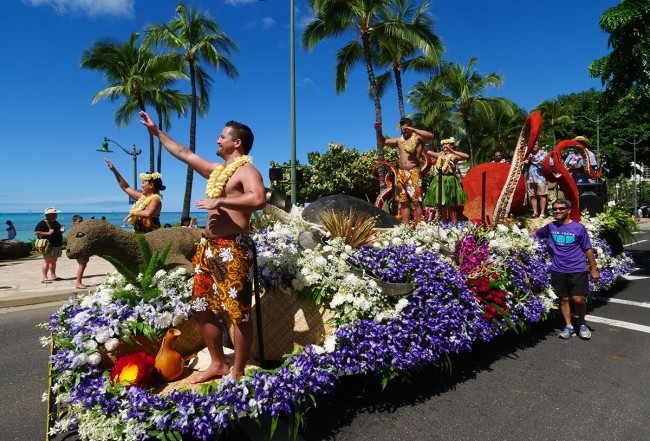
The Floral Parade closes the main festival program with horseback riders, hula performers, marching groups and floats decorated with fresh Hawaiian flowers. The procession begins at Ala Moana Park, travels through Kalākaua Avenue and finishes at Kapiʻolani Park on September 26.
The traditional pāʻū riders are among the parade’s most distinctive participants. Riders appear in flowing garments and floral adornments while representing Hawaiian horsemanship and island traditions.
The parade is more meaningful when visitors pay attention to the details rather than only photographing the largest floats. Look for the way flowers are attached, the colors worn by riding units and the coordination between musicians, dancers and community groups.
Where is the best place to watch the Aloha Festivals Floral Parade?
The best viewing area depends on whether you prioritize convenience, photography or a quicker exit.
| Viewing area | Main advantage | Main drawback |
|---|---|---|
| Near Ala Moana Park | See participants early while flowers and costumes look fresh | Farther from central Waikīkī hotels |
| Central Kalākaua Avenue | Convenient for most Waikīkī visitors | Usually the most crowded section |
| Near Kapiʻolani Park | More open space and easier access to park areas | Parade units may be more spread out |
| Raised hotel frontage | Clearer view over standing spectators | Limited public space and possible access restrictions |
For families with children, a position near Kapiʻolani Park usually provides more breathing room than the busiest central hotel blocks.
For photography, stand where morning light is less likely to face the camera directly. Avoid stepping into the street, even when other spectators do it.
When should you arrive for the Aloha Festivals parade?
Arrive at least one hour before the 9 a.m. start if you want a front-row position along Kalākaua Avenue.
People staying nearby often underestimate the crowd because the parade route initially looks open. Once barriers, performers and spectators fill the area, moving between blocks becomes slow.
Bring:
- Water
- Sunscreen
- A hat
- A compact folding fan
- Comfortable shoes
- A small towel
- A portable charger
Avoid bringing a large beach umbrella. It blocks views, creates problems in crowded areas and becomes difficult to manage when people start moving.
Are Aloha Festivals events only held in Waikīkī?
The three principal Aloha Festivals events take place on Oʻahu, mainly in Waikīkī, while partner organizations hold additional ʻOhana Events. Since 2008, events on neighboring islands have been managed independently, so travelers visiting Maui, Kauaʻi, Hawaiʻi Island, Molokaʻi or Lānaʻi should check that island’s visitor information separately.
Do not assume that every September event using the words “aloha festival” belongs to the same official schedule. Check the organizer, island and venue before arranging flights or hotels.
How should visitors get to Aloha Festivals in Waikīkī?
Walking or public transport is usually easier than driving because the Hoʻolauleʻa and Floral Parade require major use of Kalākaua Avenue.
The City and County of Honolulu introduced tighter limits on Waikīkī street festivals beginning in 2026 to reduce congestion, although legacy events including the Hoʻolauleʻa remain protected. Road controls will still affect traffic, deliveries and access around the event area.
Use this transport strategy:
- Walk from a Waikīkī hotel when the distance is manageable.
- Use TheBus when staying elsewhere in Honolulu.
- Get off several blocks before the closure if buses are rerouted.
- Avoid requesting a rideshare directly beside the crowd.
- Check your return route before the event begins.
Drivers should use the festival’s recommended parking information rather than circling Waikīkī looking for an open curb space. The official FAQ directs visitors to its event parking guidance.
How to avoid rideshare cancellations after the Hoʻolauleʻa
Walk away from Kalākaua Avenue before requesting the ride.
Choose a legal pickup point on a street that remains open, send the driver a clear landmark and confirm which side of the road you are standing on. A vague message such as “outside the festival” is unlikely to work when thousands of people are leaving together.
Hotel names are useful only when vehicles can still reach that entrance. Check the map rather than assuming the nearest lobby is accessible.
What should you wear to Aloha Festivals Hawaii?
Wear light clothing, comfortable footwear and respectful attire suited to heat, walking and cultural performances.
For the daytime parade, prioritize sun protection. For the evening Hoʻolauleʻa, choose shoes that remain comfortable after several hours on pavement.
A practical outfit includes:
- Breathable shirt or dress
- Walking sandals or broken-in shoes
- Hat for the parade
- Light rain layer
- Small crossbody bag
- Refillable water bottle
- Reef-conscious sun protection
Avoid wearing a fresh flower lei carelessly or discarding it in a rubbish bin after a photograph. Lei carry cultural meaning. Treat them with respect and follow local guidance on appropriate disposal or return to nature.
Is Aloha Festivals good for children?
The Floral Parade is the easiest main event for families because it takes place in daylight and follows a clear route.
The Hoʻolauleʻa can also work well for older children, but crowds become dense after dark. Parents should photograph their child’s clothing before entering, place a contact number in a pocket and choose a specific meeting point.
Use a landmark that will not move, such as a named hotel entrance or recognized public building. “Near the music” is not a safe meeting plan because several stages may be operating.
Strollers can become difficult to maneuver at the busiest time. Families using one should arrive early and stay near the edge of the crowd rather than attempting to cross the center repeatedly.
How can visitors attend Aloha Festivals respectfully?
Listen first, avoid blocking performers and remember that Hawaiian culture is living culture rather than decoration.
Good visitor behavior includes:
- Learning the correct event names before arriving
- Allowing chants and ceremonies to finish without interruption
- Buying directly from local artisans
- Asking permission for close-up portraits
- Keeping children out of performance routes
- Disposing of rubbish properly
- Following instructions from event staff
- Avoiding jokes about unfamiliar words or protocols
The deeper value of the festival appears when visitors slow down. A hula performance is not simply movement set to music. Gesture, chant, clothing and song may communicate a story tied to place, genealogy or history.
Which Aloha Festivals 2026 event should you choose?
Choose the Royal Court ceremony for cultural depth, the Hoʻolauleʻa for variety and the Floral Parade for the strongest first-time visitor experience.
| Traveler type | Best event |
|---|---|
| First visit to Hawaiʻi | Floral Parade |
| Interested in Hawaiian history | Royal Court Investiture |
| Food-focused traveler | Waikīkī Hoʻolauleʻa |
| Family with young children | Floral Parade |
| Evening entertainment seeker | Waikīkī Hoʻolauleʻa |
| Photographer | Floral Parade and Royal Court ceremony |
Travelers staying for all three September weekends can see the festival develop from formal opening to community celebration and final parade. Those attending only one event should select based on experience rather than convenience.
Is Aloha Festivals Hawaii worth attending?
Aloha Festivals is worth attending because it places living Hawaiian culture at the center of Waikīkī rather than at the edge of a commercial visitor experience.
The strongest moments are often small: the silence before a chant begins, the detail in a rider’s lei, a child performing hula with their hālau or a local artisan explaining how an item was made.
Visitors who arrive only for quick photographs may see a colorful event. Those who arrive early, listen and understand what they are watching will experience something more valuable: a community telling its own stories in one of Hawaiʻi’s most visited places.
Aloha Festivals Hawaii frequently asked questions
When are Aloha Festivals Hawaii 2026?
The main 2026 events take place on September 5, September 19 and September 26 on Oʻahu.
Where is the Aloha Festivals parade?
The Floral Parade travels from Ala Moana Park through Kalākaua Avenue and ends at Kapiʻolani Park.
What time is the Waikīkī Hoʻolauleʻa?
The dedicated event page lists the Hoʻolauleʻa from 6 to 10 p.m. on September 19, with vendors opening at 4 p.m.
What does Hoʻolauleʻa mean?
Hoʻolauleʻa refers to a celebration, gathering or festival. At Aloha Festivals, it describes the large street celebration on Kalākaua Avenue.
What is special about Aloha Festivals 2026?
The 2026 program marks 80 years since the celebration began as Aloha Week in 1946.
Is the Floral Parade suitable for children?
Yes. The daytime schedule, colorful floats and open parade route make it the most family-friendly signature event.
Does Aloha Festivals happen on every Hawaiian island?
The official three-event program is held on Oʻahu. Neighbor-island events have been organized independently since 2008.