
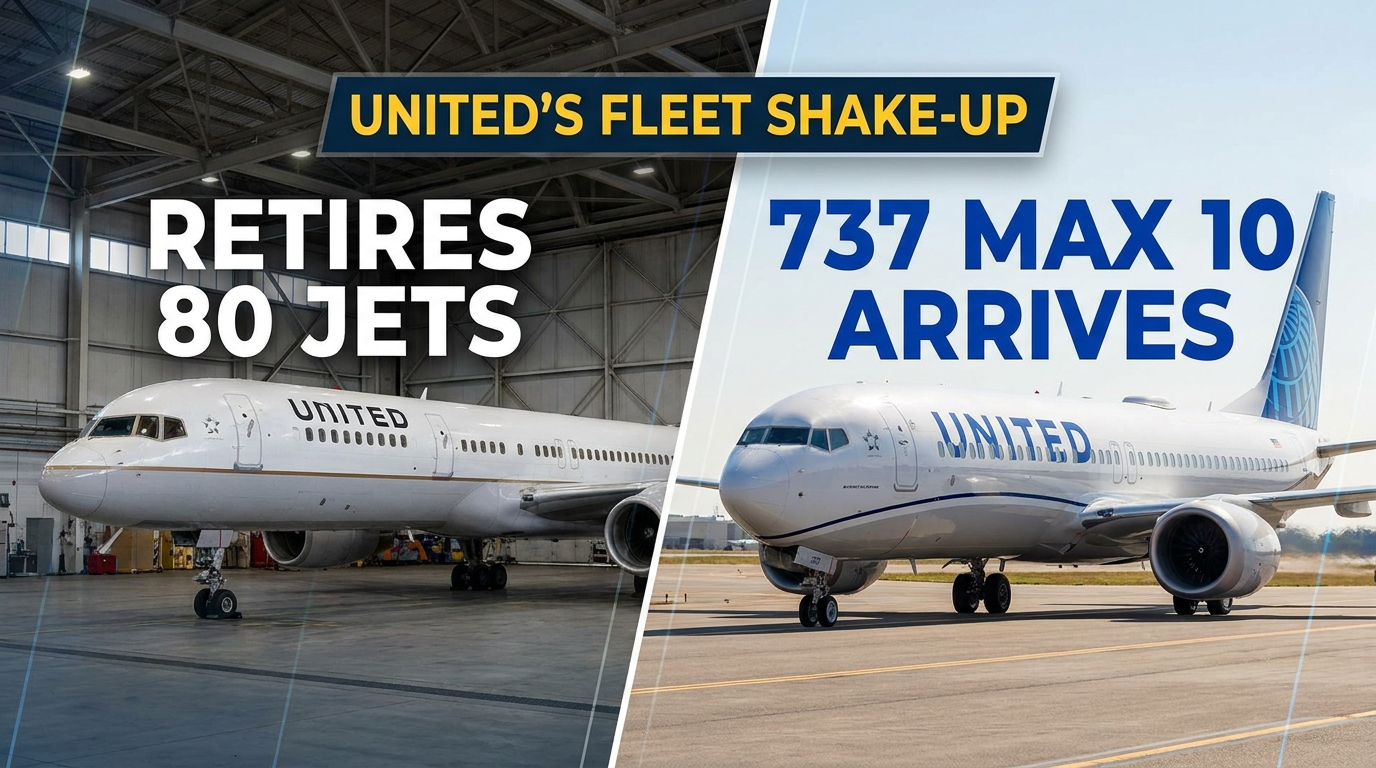


United Airlines plans to retire at least 80 older aircraft in 2027 as it prepares to receive its first Boeing 737 MAX 10 jets and accelerates one of the largest fleet-renewal programs in commercial aviation.
The decision is not simply about replacing old planes with new ones. United is using larger, more efficient aircraft to add seats, improve premium cabins, reduce operating costs per passenger, and simplify parts of its fleet.
The airline expects to receive up to 20 Boeing 737 MAX 10s during 2027, although the final timing still depends on regulatory certification and Boeing’s ability to deliver the aircraft. Boeing says it expects the 737-10 to be certified in 2026, with first customer deliveries following in 2027.
For passengers, the changes could mean newer cabins, larger overhead bins, more premium seats, improved entertainment, and faster Wi-Fi. The less visible effect will be a gradual reduction in smaller and older aircraft that cost more to operate on a per-seat basis.
What Has United Airlines Announced for 2027?
United has confirmed that it intends to retire at least 80 aircraft during 2027 while continuing to introduce larger Boeing and Airbus jets.
Company executives disclosed the retirement target during United’s second-quarter 2026 earnings discussion. The airline described the plan as part of its strategy to renew and “upgauge” the fleet, meaning it will replace some aircraft with planes that carry more passengers.
The plan includes three important developments:
- At least 80 older aircraft will leave the fleet
- The first Boeing 737 MAX 10s are expected to arrive
- New aircraft will generally offer more seats and lower costs per seat
United has not released a complete public list showing exactly which 80 aircraft will be retired. Reports that name every model should therefore be treated carefully unless the airline provides a formal fleet schedule.
Why Is United Retiring So Many Aircraft at Once?
United is retiring 80 aircraft because its large delivery pipeline finally gives it more freedom to remove older, less efficient jets.
Airlines often keep aging aircraft longer when manufacturers cannot deliver replacements. Boeing’s production and certification delays forced United to revise its fleet plans several times, including converting some planned MAX 10 deliveries to the smaller MAX 9.
As aircraft availability improves, United can make retirement decisions based on:
- Fuel consumption
- Maintenance expense
- Spare-parts availability
- Cabin condition
- Seating capacity
- Pilot and technician requirements
- Reliability
- Suitability for the airline’s current network
An older aircraft is not automatically unsafe. Commercial jets must continue meeting regulatory and maintenance requirements regardless of age. The business problem is that an older plane can require more maintenance, consume more fuel, and carry fewer passengers than a modern replacement.
Which United Aircraft Could Be Retired?
United has not confirmed the entire retirement mix, but its oldest narrowbody and long-haul fleets are the most important groups to watch.
The airline still operates several mature aircraft types, including Airbus A319s and A320s, Boeing 737-700s, Boeing 757s, and Boeing 767s. Some of these jets have already been identified in United’s broader replacement plans, particularly as Airbus A321neos, A321XLRs, Boeing 737 MAX aircraft, and new Boeing 787s enter service.
| Existing aircraft group | Likely replacement role | Why it matters |
|---|---|---|
| Older Airbus A319s and A320s | A321neo and 737 MAX family | More seats and newer cabins |
| Boeing 737-700s | Larger MAX aircraft | Lower seat count makes them less efficient on busy routes |
| Boeing 757s | Airbus A321XLR and other A321 variants | Newer aircraft can operate long, thin routes |
| Boeing 767s | Boeing 787s and selected narrowbody aircraft | Fleet modernization and premium-cabin upgrades |
This table shows the strategic direction, not a confirmed list of the 80 retirements. United could also adjust the plan according to delivery delays, aircraft condition, demand, and fuel prices.
When Will United Receive Its First Boeing 737 MAX 10?
United currently expects its first Boeing 737 MAX 10 deliveries in 2027, provided the aircraft completes certification as planned.
Boeing reported in April 2026 that the 737-10 had entered a final phase of certification flight testing. The manufacturer said it expected certification of both the 737-7 and 737-10 during 2026, followed by first deliveries in 2027.
In June, Boeing said crews were still completing certification tests involving demanding crosswind and automated-landing conditions. These tests are designed to prove that the aircraft performs within approved limits under challenging real-world conditions.
The timeline has advanced, but it is not guaranteed. Certification belongs to aviation regulators, not Boeing or United.
Why Has the Boeing 737 MAX 10 Been Delayed?
The MAX 10 has been delayed by certification work, design changes, increased regulatory scrutiny, and a required engine anti-ice system redesign.
The engine anti-ice issue involves the possibility of excessive heat in certain operating conditions. Boeing has worked on a redesigned system that must be approved before the final certification process can be completed. Reuters reported on July 16, 2026, that approval of the fix was approaching and that the MAX 10 certification program was close to completion.
Boeing’s own public information still listed the 737-10 as undergoing certification rather than being in airline service.
Also read – Pratt & Whitney Expands PW1900G Production in Connecticut
What Is the Boeing 737 MAX 10?
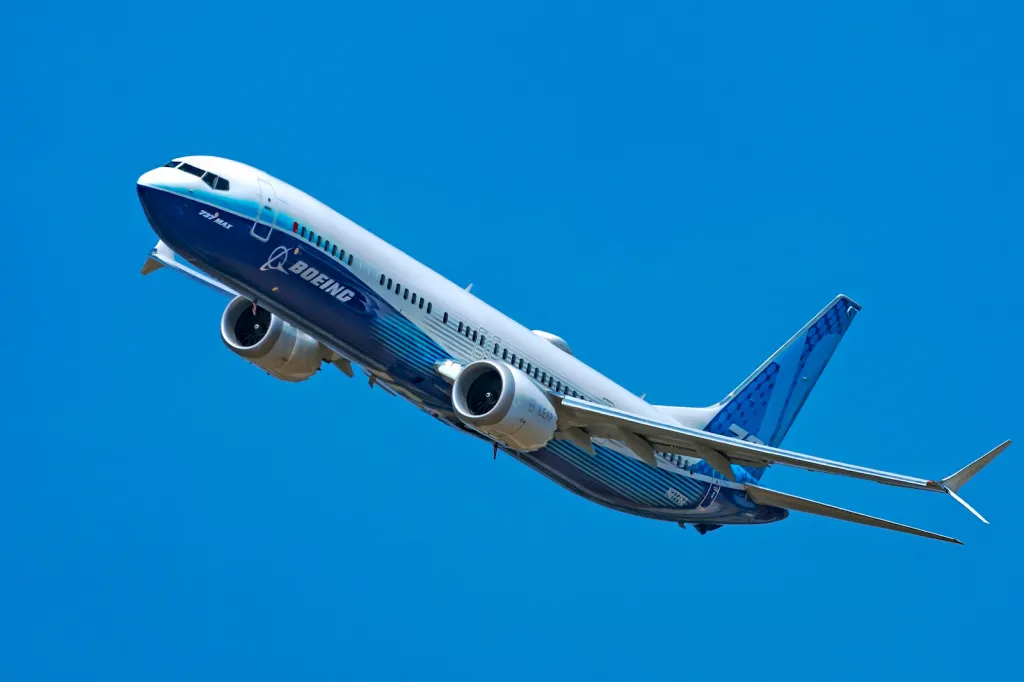
The Boeing 737 MAX 10 is the largest member of the current 737 MAX family and is designed for airlines that need more seats without moving to a widebody aircraft.
The aircraft is longer than the 737 MAX 8 and MAX 9. Its larger cabin allows airlines to carry more passengers while retaining the operational familiarity of the 737 family.
For United, the MAX 10 is attractive because it can offer:
- More seats per departure
- Additional premium seating
- Lower operating cost per seat
- Commonality with United’s other 737 aircraft
- Newer cabin technology
- Greater capacity at slot-constrained airports
United executives have said the MAX 10 is expected to provide more premium seats and lower unit costs than smaller aircraft.
What Does “Upgauging” Mean for United Passengers?
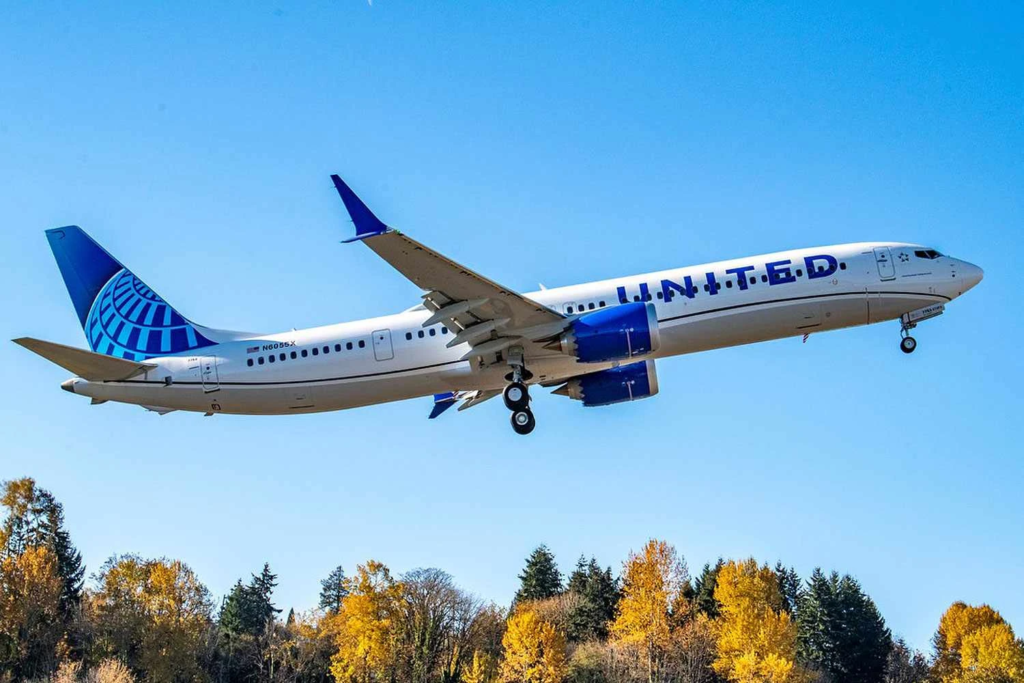
Upgauging means United will use larger aircraft to carry more passengers on a flight without necessarily adding another departure.
For example, replacing a smaller jet with a larger MAX 10 can allow United to sell more seats while using one aircraft, one flight crew, and one departure slot.
This is particularly valuable at airports where gates, runway capacity, or takeoff slots are limited.
Upgauging can bring passenger benefits:
- More premium seats
- Larger overhead bins
- Newer seatback screens
- Updated lighting and interiors
- More stable availability on busy routes
- Better chances of receiving modern Wi-Fi
However, larger aircraft do not guarantee more personal space. Airlines decide the seat pitch, cabin layout, and number of seats installed.
Will Retiring 80 Aircraft Mean Fewer United Flights?
The retirements do not automatically mean United will operate fewer flights because new and larger aircraft are entering the fleet at the same time.
United announced in March 2026 that it expected to add more than 250 aircraft over approximately two years, describing the program as the largest fleet intake planned by any airline during that period.
The airline can therefore retire older planes while still increasing total seats.
The calculation works like this:
| Fleet action | Possible result |
| Retire one small aircraft | Removes an older, lower-capacity jet |
| Add one larger aircraft | Replaces the lost seats and may add more |
| Increase seats per departure | Supports growth without matching flight-frequency growth |
| Reduce aircraft types over time | Can simplify training and maintenance |
Passengers may see fewer small aircraft on some routes, but the total number of available seats could remain stable or increase.
How Does the Plan Affect Smaller U.S. Cities?
Smaller cities could see larger aircraft, adjusted schedules, or continued United Express service depending on local demand.
A mainline aircraft retirement does not always remove a destination from the network. United can:
- Replace the aircraft with a larger mainline jet
- Shift the route to a United Express partner
- Reduce frequency while preserving total seats
- Move aircraft between hubs
- Operate the route seasonally
- Adjust departure times around connecting banks
The effect will differ by airport. A busy route may receive a larger aircraft, while a lower-demand market may continue using a regional jet.
Travelers should not assume that the 80 retirements equal 80 cancelled routes.
What Will Passengers Notice on the New United Aircraft?
Passengers are most likely to notice newer interiors, larger storage bins, improved screens, upgraded Wi-Fi, and more premium seating.
United is installing Starlink across its fleet and reported in July 2026 that the system was already available on 450 mainline and United Express aircraft. The airline expected nearly 1,000 aircraft to have Starlink by the end of 2026 and targeted fleetwide coverage by the end of 2027.
United’s broader cabin program includes:
- Seatback entertainment on more aircraft
- Bluetooth connectivity
- Larger overhead bins
- More Economy Plus seats
- Expanded first-class or premium capacity
- Faster satellite internet
- Updated power connections
The exact MAX 10 interior may change before commercial service begins, particularly because the first delivery remains dependent on certification.
Why the 80 Aircraft Retirement Plan Matters Financially
Retiring older aircraft can lower maintenance and fuel expenses, but buying replacement jets requires substantial cash and long-term financing.
United said it raised $3.7 billion in new liquidity during the second quarter of 2026 and planned to use available cash partly to fund aircraft deliveries in 2026 and 2027.
The financial trade-off is clear:
Potential advantages
- Lower fuel use per seat
- Fewer heavy maintenance events
- More passengers per flight
- Higher premium-seat revenue
- Improved customer satisfaction
- Stronger fleet reliability
Potential costs and risks
- Aircraft purchase or lease payments
- Training expenses
- Spare engines and parts
- Cabin installation costs
- Certification delays
- Manufacturer delivery disruption
- Higher depreciation
A new aircraft may be cheaper to operate, but it is not free to introduce.
How Do Boeing Delays Affect United’s Retirement Plan?
Boeing delays could force United to keep some older aircraft longer because the airline cannot retire a jet until adequate replacement capacity is available.
United has already demonstrated this flexibility. In 2024, it converted part of its planned MAX 10 order stream to MAX 9 aircraft and preserved the right to make additional changes.
In 2025, a United executive said the carrier might not receive the MAX 10 until 2027 or 2028 because of certification uncertainty. The latest plan is more confident, but the earlier warning shows why fleet schedules remain adjustable.
A practical airline retirement plan normally includes backup options:
- Extend leases on existing aircraft
- Delay a planned retirement
- Lease aircraft from another company
- Accept a different aircraft model
- Reduce planned capacity
- Shift aircraft between routes
United is unlikely to remove 80 aircraft without replacement coverage.
Does the MAX 10 Have Approval to Carry Passengers?
No. As of July 17, 2026, the Boeing 737 MAX 10 remains in certification and has not entered scheduled airline service.
Boeing expects certification in 2026, but regulators must complete their review before deliveries and passenger flights begin.
This distinction is important because airline delivery forecasts are planning assumptions, not regulatory approvals.
Travelers seeing a MAX 10 listed in future fleet announcements should not assume the aircraft is already flying.
What Should Travelers Watch Before Booking?
Travelers should watch the aircraft type shown closer to departure, but they should not choose a flight solely because it is scheduled to use a new MAX 10.
Airlines can change aircraft for operational reasons, sometimes shortly before departure.
A better booking checklist is:
- Check the seat map
- Compare legroom by cabin
- Look for seatback entertainment
- Confirm whether Wi-Fi is offered
- Review the connection time
- Avoid seats near galleys when noise matters
- Recheck the aircraft several days before travel
- Remember that equipment substitutions are common
A scheduled MAX 10 flight could be operated by another aircraft if delivery or maintenance plans change.
United’s 2027 Fleet Plan in One Table
| Key question | Direct answer |
| How many aircraft will United retire? | At least 80 in 2027 |
| Has United named every aircraft? | No |
| When are the first MAX 10s expected? | 2027 |
| How many could arrive in 2027? | Up to 20, based on the current plan |
| Is the MAX 10 certified? | Not as of July 17, 2026 |
| When does Boeing expect certification? | During 2026 |
| Why retire older jets? | Lower costs, newer cabins and more seats per departure |
| Will United shrink? | Not necessarily, because it is adding larger new aircraft |
| What is the biggest risk? | Certification and delivery delays |
What Happens Next for United and Boeing?
The next major step is certification of the 737 MAX 10, followed by repeatable deliveries rather than a single ceremonial handover.
Five developments will show whether United’s plan is staying on track:
- Regulatory approval of the MAX anti-ice redesign
- Completion of MAX 10 certification
- Confirmation of United’s first delivery date
- Publication of the final United cabin layout
- Identification of the aircraft included in the 80 retirements
The retirement plan becomes easier to judge once United explains exactly which jets will leave and how quickly replacements will enter service.
Final Verdict: United Is Preparing for a Larger, Newer Fleet
United’s plan to retire at least 80 aircraft in 2027 signals a major shift from holding on to older capacity toward actively replacing it with larger, more efficient jets.
The Boeing 737 MAX 10 sits at the center of that strategy because it gives United more seats and premium capacity without requiring a widebody aircraft. Airbus A321 variants and Boeing 787 deliveries will support other parts of the renewal program.
The important detail is timing. United can announce retirements today, but Boeing and regulators will determine how quickly the MAX 10 becomes a dependable part of the fleet.
For passengers, the change should eventually produce newer cabins and more modern onboard technology. For United, the deeper goal is simple: carry more passengers at a lower cost per seat while removing aircraft that no longer fit its long-term network.