
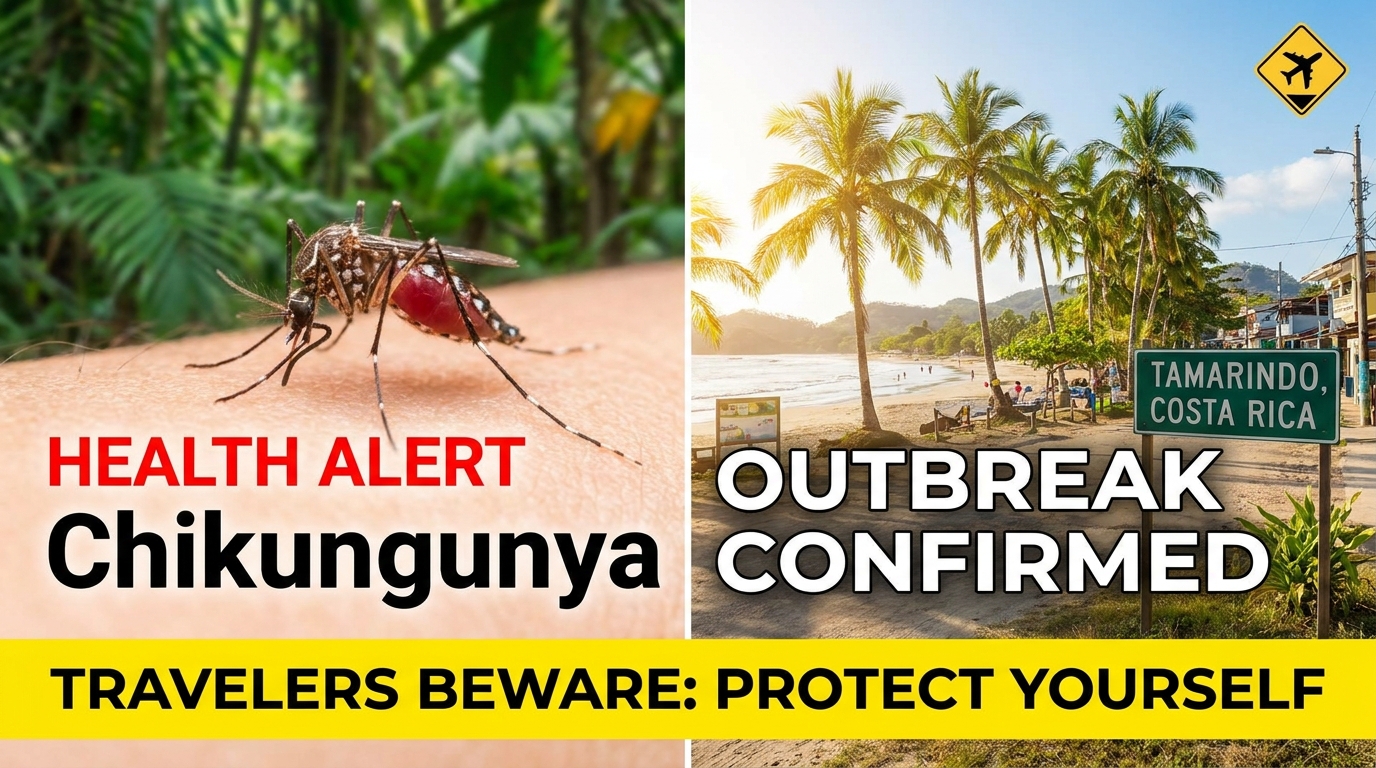


Costa Rica has confirmed a chikungunya outbreak in Playa Langosta, a popular beach community beside Tamarindo in Guanacaste. Travelers do not need to cancel automatically, but they should begin mosquito protection before leaving the airport and continue it throughout the day.
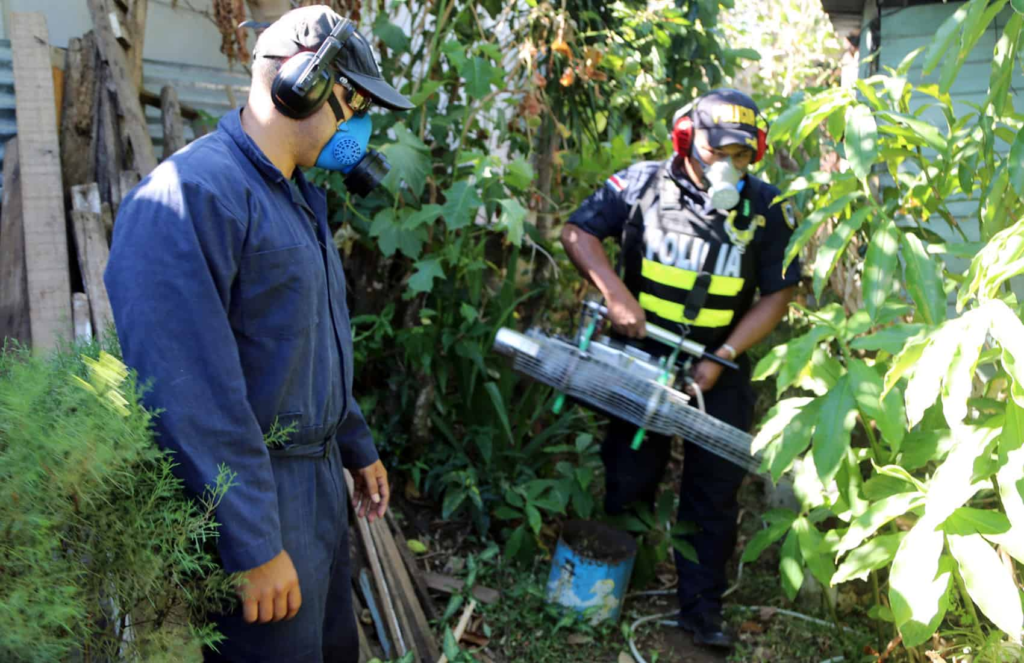
Costa Rica’s Ministry of Health identified the outbreak on July 1, 2026, after investigating 45 suspected cases. Laboratory testing confirmed four cases, while another 17 were classified as probable and connected to the outbreak. Both Costa Rican residents and foreign nationals were included among the people investigated.
The development is significant because Costa Rica had not recorded active chikungunya circulation since 2017. Health authorities said the country had reported 16 chikungunya cases during 2026, including those connected to Playa Langosta.
What Travelers Need to Know Now
The outbreak is localized around Playa Langosta, but mosquito precautions are sensible throughout the Tamarindo area and wider Guanacaste region.
| Key question | Direct answer |
|---|---|
| Where is the outbreak? | Playa Langosta, Santa Cruz canton, Guanacaste |
| When was it identified? | July 1, 2026 |
| How many cases were investigated? | 45 suspected cases |
| How many were confirmed? | Four laboratory-confirmed cases |
| How many were considered probable? | 17 outbreak-linked cases |
| Is Costa Rica closed to tourists? | No |
| Should travelers cancel? | Not automatically |
| Main protection | Prevent mosquito bites throughout the day |
The U.S. Embassy in San José issued a health alert on July 13 after Costa Rican authorities announced the outbreak. The alert reinforced the need for visitors and residents to use mosquito repellent and monitor for symptoms.
Where Is Playa Langosta, and Is Tamarindo Affected?
Playa Langosta is immediately south of Tamarindo, which means travelers staying in the larger resort area should take the outbreak seriously even if their hotel address does not say Playa Langosta.
The two beach communities are close enough that visitors regularly move between them for restaurants, surfing, shopping and accommodation. Mosquitoes do not follow hotel boundaries or neighborhood signs, and travelers may also encounter them during airport transfers, nature excursions and visits to nearby towns.
This does not mean every visitor to Tamarindo will become infected. It means relying on a resort’s location alone is not a useful safety plan.
A traveler may spend the morning surfing at Playa Langosta, have lunch in Tamarindo and return to a villa with a shaded garden. That day can involve several hours of mosquito exposure even without entering a forest or wetland.
The practical response is to treat the entire day as mosquito time.
Also read – Canada Updates Travel Advice for 5 Popular Destinations
What Is Chikungunya?
Chikungunya is a viral illness spread mainly through the bites of infected Aedes mosquitoes, including the same mosquito that transmits dengue and Zika.
The most common symptoms are:
- Sudden fever
- Severe joint pain
- Joint swelling
- Headache
- Muscle pain
- Nausea
- Fatigue
- Rash
The U.S. Centers for Disease Control and Prevention says fever and joint pain are the most common symptoms. There is no specific antiviral medicine that cures the infection, although rest, fluids and appropriate pain relief can help manage symptoms.
The name may sound unfamiliar to many Costa Rica visitors, but the pain can be difficult to ignore. Joint pain may affect the wrists, hands, ankles and knees, making routine movements such as climbing stairs, carrying luggage or getting out of bed uncomfortable.
The Pan American Health Organization reports that chronic joint pain may continue for weeks or months in a substantial share of patients.
Is the Costa Rica Chikungunya Outbreak Dangerous?
Most people recover, but chikungunya can cause severe symptoms and prolonged joint pain, particularly in vulnerable travelers.
People who require additional caution include:
- Babies younger than one year
- Older adults
- Pregnant travelers
- People with diabetes
- People with high blood pressure
- People with heart disease
- Travelers with other long-term medical conditions
PAHO identifies infants, older adults, pregnant women and people with underlying health conditions as groups with a higher risk of serious illness.
A fit adult may recover after a difficult week, but that does not make the illness minor. Severe joint pain can disrupt flights, tours, work and everyday movement. For an older visitor already managing arthritis, the effect may be more serious and last much longer than the original holiday.
Should You Cancel a Tamarindo or Playa Langosta Trip?
Most healthy travelers do not need to cancel solely because an outbreak has been reported, but they should review their personal health risks and accommodation setup.
Continuing the trip may be reasonable when:
- You can use effective insect repellent consistently
- Your room has air conditioning or intact window screens
- The accommodation removes standing water
- You can wear light, covering clothing
- You have medical insurance
- You know where to obtain medical help
- You do not belong to a high-risk group
Consider speaking with a travel-health professional before departure when:
- You are pregnant
- You are traveling with a baby
- You are older or medically vulnerable
- You have a condition affecting your joints or immune system
- You plan an extended stay
- Your accommodation is open-air
- You expect extensive outdoor exposure
A cancellation decision should be based on health needs, booking flexibility and exposure risk, not a frightening headline alone.
Why Daytime Mosquito Protection Matters in Costa Rica
The mosquitoes that spread chikungunya are active during the day, so applying repellent only before dinner is not enough.
Many travelers associate mosquito bites with sunset. That assumption creates a gap in protection during breakfast, beach walks, pool time and morning excursions.
Aedes mosquitoes are especially active in the early morning and around dusk, but they can bite at other times. PAHO notes that the mosquito lives close to homes and breeds in containers holding water.
Use protection during:
- Breakfast on an open terrace
- Morning beach walks
- Poolside reading
- Outdoor restaurant meals
- Garden or mangrove tours
- Surf lessons
- Sunset drinks
- Time inside open-air hotel lobbies
The mosquito responsible is well adapted to places where people live and stay. Travelers do not need to enter deep jungle to be exposed.
How to Prevent Chikungunya in Costa Rica
The best protection is a layered routine combining repellent, clothing, screened accommodation and removal of standing water.
1. Apply sunscreen before mosquito repellent
Costa Rica’s Ministry of Health specifically advises applying sunscreen first and repellent afterward.
A practical morning sequence is:
- Apply sunscreen to dry skin
- Allow it to settle
- Apply mosquito repellent
- Reapply products according to their labels
- Reapply after swimming or heavy sweating when required
Do not spray repellent near the eyes or mouth. Apply it to the hands first when protecting the face.
2. Carry repellent in your hand luggage
Do not pack your only bottle in checked baggage.
Mosquito exposure can begin during the transfer from Liberia airport, while waiting outside a rental office or when checking into an open-air property.
Keep a travel-size product available as soon as you land.
3. Wear loose, light clothing
Loose long sleeves and trousers offer useful protection without becoming unbearable in tropical heat.
Tight fabric may still allow mosquitoes to bite through it. Lightweight, breathable clothing works better for outdoor breakfasts, evening meals and nature trips.
4. Check the room before unpacking
A beautiful villa can still have torn screens, open vents or water-filled plant trays.
Check:
- Window and door screens
- Gaps around sliding doors
- Balcony containers
- Plant pots
- Outdoor showers
- Buckets and decorative bowls
- Water collected on furniture covers
Ask the host to remove standing water rather than doing nothing because it seems like a small amount. Aedes mosquitoes can breed in relatively small containers.
5. Use air conditioning or mosquito nets
Costa Rica’s Health Ministry recommends mosquito nets as part of the outbreak response.
A mosquito net should be tucked properly and free from tears. Air-conditioned rooms with closed doors and windows can also reduce exposure.
What Is Costa Rica Doing About the Outbreak?
Health teams have carried out large-scale fumigation, home inspections and mosquito-breeding-site removal in and around the affected community.
Authorities reported:
- Fumigation of about 5,000 homes
- Targeted interventions at 638 homes
- Removal of mosquito breeding sites found during inspections
- Epidemiological monitoring of suspected cases
- Laboratory testing through Costa Rica’s national health-research institute
- Continued coordination with local authorities
These actions are designed to reduce the number of mosquitoes and interrupt transmission.
Fumigation helps, but it does not create permanent protection. New mosquitoes can emerge when rainwater collects in flower pots, roof gutters, buckets, tires or other containers.
Travelers should therefore continue personal precautions even when they see spraying or hear that their hotel has been treated.
What Symptoms Should Travelers Watch For?
Seek medical advice when fever appears with strong joint pain, swelling, rash or unusual fatigue during or after a Costa Rica trip.
Costa Rica’s Health Ministry advises medical assessment for symptoms including:
- Fever above 39°C
- Joint pain or inflammation
- Headache
- Nausea
- General discomfort
Tell the doctor:
- That you recently visited Guanacaste
- Whether you stayed in Playa Langosta or Tamarindo
- When symptoms began
- Whether you noticed mosquito bites
- Whether you are pregnant
- Which medicines you have taken
This information helps clinicians consider chikungunya alongside dengue and other mosquito-borne infections that can produce similar symptoms.
What Medicine Should You Take for Suspected Chikungunya?
Use acetaminophen or paracetamol for fever and pain unless a clinician advises otherwise, and avoid aspirin or ibuprofen until dengue has been ruled out.
This precaution matters because dengue may cause bleeding. The CDC recommends avoiding aspirin and other nonsteroidal anti-inflammatory medicines, including ibuprofen, until dengue has been excluded.
The safer initial steps are:
- Rest
- Drink water or oral rehydration fluids
- Use acetaminophen or paracetamol as directed
- Contact a healthcare provider
- Watch for worsening symptoms
Do not self-diagnose based only on joint pain. Dengue, chikungunya and other illnesses can overlap.
What Should You Do If You Become Sick at a Hotel?
Contact the front desk or property manager first, ask for medical help and remain protected from further mosquito bites.
Use this order:
- Stay in the room or another protected area
- Contact a clinic or doctor
- Ask the hotel to arrange safe transportation
- Inform your travel insurer
- Keep drinking fluids
- Record your temperature and symptoms
- Avoid mosquito bites during the first week of illness
The last point protects other people. A mosquito that bites an infected person can pick up the virus and later transmit it to someone else. The CDC advises people with chikungunya to prevent mosquito bites during the first week of illness.
A sick traveler should therefore continue using repellent and sleep under a net or in a screened, air-conditioned room.
Is There a Chikungunya Vaccine for Travelers?
Chikungunya vaccines exist, but eligibility and recommendations depend on the traveler, destination, age and medical history.
The CDC says vaccination is recommended for some travelers, while the World Health Organization notes that approved vaccines are not yet widely available or in widespread use.
Do not book a vaccine solely because of a headline. Ask a qualified travel-health provider:
- Whether your itinerary meets current recommendations
- Whether the vaccine is available in your country
- Whether your age or medical history affects eligibility
- How far before departure it must be given
- Whether the benefits outweigh the risks for your trip
Vaccination, when appropriate, does not replace repellent and other mosquito precautions.
Is Chikungunya Spreading Elsewhere in the Americas?
Yes. The Playa Langosta outbreak comes during a wider regional resurgence of chikungunya.
PAHO issued an epidemiological alert in February 2026 after observing a sustained rise in cases across parts of the Americas from late 2025 into early 2026. The organization also noted renewed local transmission in places that had gone years without circulation.
Environmental conditions that support Aedes mosquito breeding, including heat and standing water, can help outbreaks grow. This wider context explains why Costa Rican officials moved quickly despite the limited number of confirmed cases.
Smart Questions to Ask Your Costa Rica Hotel
A good hotel should provide specific answers about mosquito control rather than simply saying the property is safe.
Ask:
- How often is the property inspected for standing water?
- Are rooms fully screened or air-conditioned?
- Are mosquito nets available?
- Has the property recently been fumigated?
- Is repellent sold at reception?
- Where is the nearest medical clinic?
- Who arranges transportation after hours?
- What happens if a guest develops fever?
Save the answers in writing, particularly when booking a private villa where there may be no overnight staff.
Seven Things to Pack for Guanacaste in 2026
A small mosquito-prevention kit can protect the trip better than expensive travel gadgets.
Pack:
- Effective insect repellent
- Travel-size repellent for hand luggage
- Lightweight long-sleeved clothing
- Acetaminophen or paracetamol
- Oral rehydration packets
- Travel-insurance information
- A digital copy of medical and emergency contacts
Also check that your insurance covers outpatient treatment in Costa Rica. Some policies focus on hospital emergencies but offer limited support for clinic visits, medication or changing a flight because of illness.
The Bottom Line for Costa Rica Travelers
The chikungunya outbreak near Tamarindo is real and officially confirmed, but it is a reason for disciplined mosquito protection rather than automatic panic.
Playa Langosta remains a functioning beach destination, and Costa Rica has not announced a tourism closure. Health authorities are fumigating homes, removing breeding sites and monitoring cases.
Travelers should respond by protecting themselves from morning until night, checking accommodation screens, removing standing water and seeking medical advice quickly if fever and joint pain develop.
The most important item in your Costa Rica beach bag this year may not be your sunglasses. It may be the repellent you remember to reapply after swimming.
Frequently Asked Questions
Is there a chikungunya outbreak in Costa Rica in 2026?
Yes. Costa Rica confirmed an outbreak in Playa Langosta, Guanacaste, which was identified on July 1, 2026.
How many chikungunya cases are confirmed in Playa Langosta?
Four cases were laboratory-confirmed, and 17 additional cases were considered probable and linked to the outbreak. Authorities investigated 45 suspected cases.
Is Tamarindo affected by the chikungunya outbreak?
The confirmed outbreak is in neighboring Playa Langosta. Because travelers move easily between the communities and mosquitoes do not follow neighborhood boundaries, precautions are sensible throughout the Tamarindo area.
Should I cancel my Costa Rica vacation?
Most travelers do not need to cancel automatically. Review your health risks, accommodation and ability to prevent mosquito bites before deciding.
What are the first symptoms of chikungunya?
The most common symptoms are sudden fever and joint pain. Headache, muscle pain, swelling, nausea, fatigue and rash can also occur.
Do chikungunya mosquitoes bite at night?
They can bite at different times, but Aedes mosquitoes are particularly active during daylight hours, including early morning and around dusk.
Can chikungunya spread directly between travelers?
It does not normally spread through casual person-to-person contact. Mosquitoes transmit the virus after biting an infected person.
Is there treatment for chikungunya?
There is no specific antiviral treatment. Care focuses on rest, fluids and safe pain relief. Aspirin and ibuprofen should be avoided until dengue has been ruled out.