
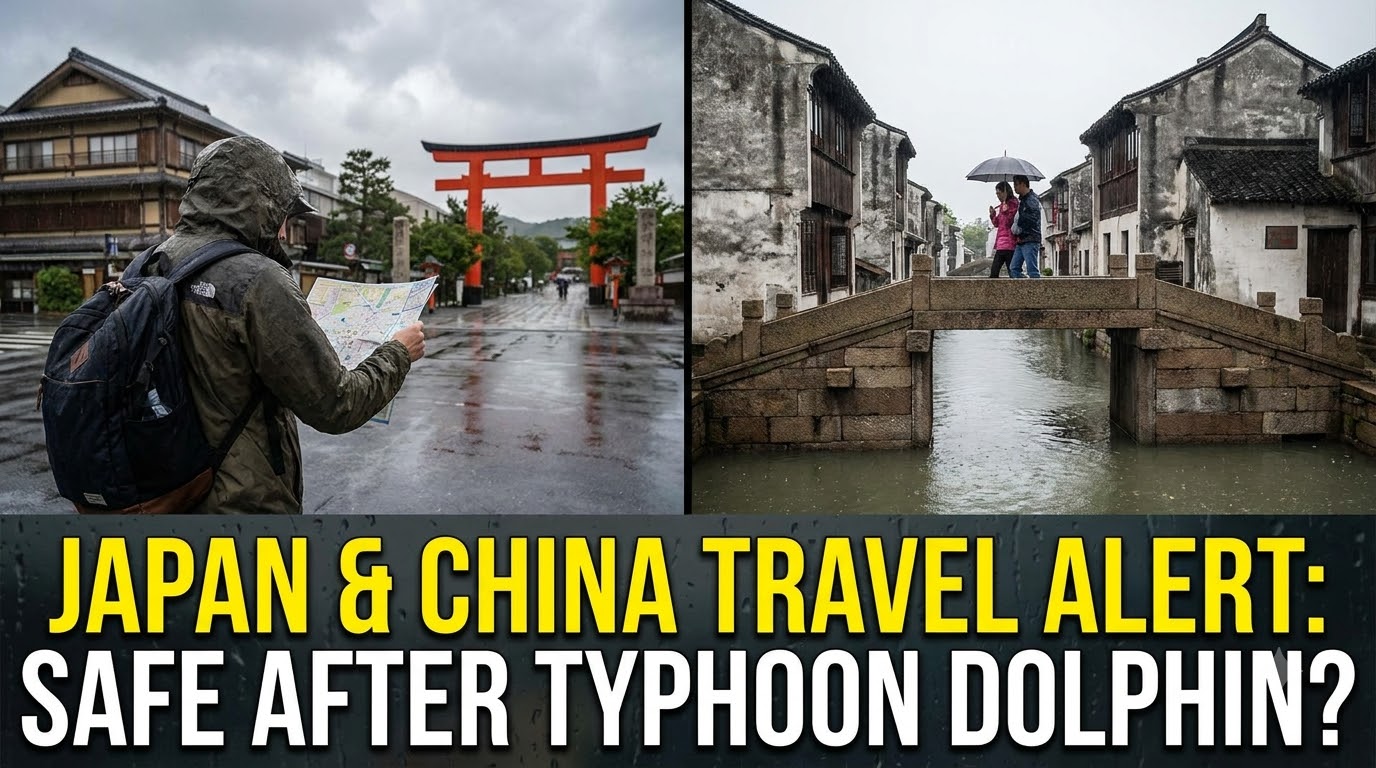


Yes, most trips to Japan can continue, but travel in parts of eastern China needs much more caution on August 10 as Typhoon Dolphin’s rain and flooding continue to disrupt flights, roads and local transport. Dolphin has already moved away from Japan and is now crossing eastern China as a tropical storm, where it is expected to weaken gradually inland.
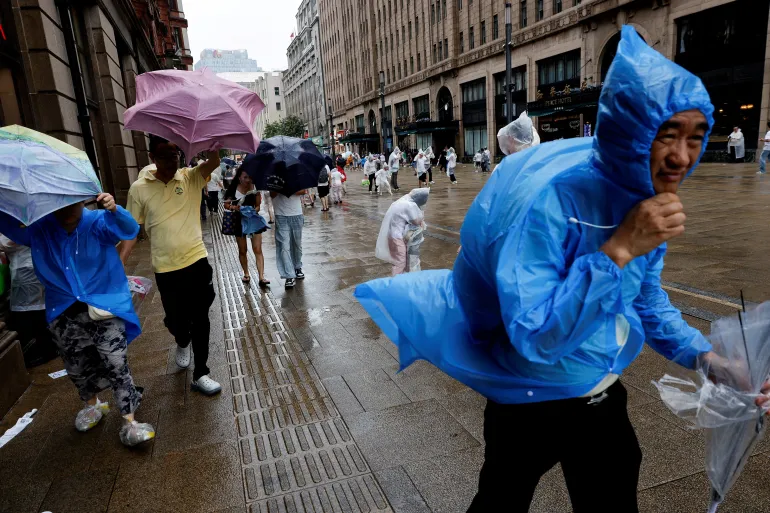
For travelers, the important question is no longer simply “Where is Typhoon Dolphin?” It is “Will the storm still affect my airport, train, road or hotel even after the center has moved away?”
Is it safe to travel to Japan during Typhoon Dolphin?
Travel to most of Japan can continue, but passengers flying through Okinawa should still check for recovery delays before leaving for the airport. Dolphin hit Okinawa and nearby southern islands hard on August 7–8, forcing more than 500 flight cancellations, evacuation orders and widespread power cuts. The storm has since moved west into China.
The current UK government Japan travel advice does not carry a blanket typhoon-related warning against travel to Japan. It does advise travelers to monitor Japan Meteorological Agency forecasts, particularly during the July-to-September peak of the typhoon season.
Japan travel situation at a glance
| Destination | Traveler situation |
|---|---|
| Tokyo | Dolphin itself is no longer the main direct threat |
| Kyoto/Osaka | Most travelers should monitor normal weather and transport updates |
| Okinawa/Naha | Check flights carefully after major weekend disruption |
| Kyushu | Continue monitoring weather, especially after recent severe conditions |
| Japan generally | Do not cancel solely because Dolphin previously crossed Okinawa |
There is another reason not to stop checking the forecast: Tropical Storm Chan-hom is also active near Japan as of August 10, according to the Japan Meteorological Agency. That is separate from Dolphin and means a “Dolphin has passed” headline should not be your final weather check.
Is it safe to travel to China after Typhoon Dolphin?
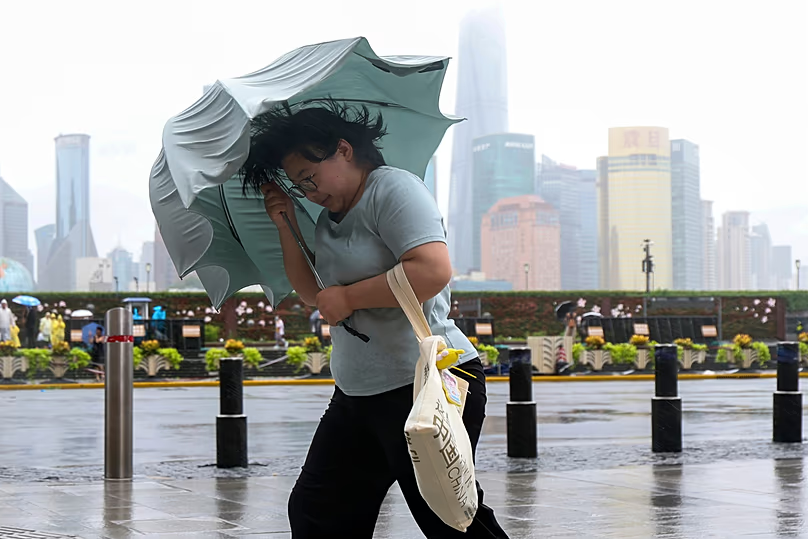
China requires much more destination-specific caution because Dolphin is still producing dangerous rain and transport disruption. At 2 p.m. Hong Kong time on August 10, Dolphin remained a tropical storm over eastern China with sustained winds near 65 km/h, although it is forecast to weaken as it moves inland.
Shanghai is currently one of the clearest trouble spots. A total of 943 flights were cancelled at Pudong and Hongqiao airports on Monday, cutting airport capacity by almost 40%. Streets were flooded in parts of the city, including Jiading and Qingpu, while authorities in Jinshan allowed temporary suspensions of non-essential activity and transit because of continuing heavy rain.
The current UK government China travel advice tells visitors to monitor the China Meteorological Administration and follow local evacuation or safety instructions during typhoons and floods. It does not issue a blanket Typhoon Dolphin prohibition on travel throughout mainland China.
Where is Typhoon Dolphin affecting travel most?
Eastern and parts of central China remain the main concern, while the rain threat is also spreading north. Dolphin’s rain clouds continued across Anhui, Jiangsu and Shandong on Monday, while the system is forecast to move toward Hubei and Henan. Beijing is preparing for significant rainfall from Tuesday through Thursday, with flash-flood and landslide risks highlighted around the capital and surrounding mountainous areas.
That means a traveler heading to Tokyo is in a very different situation from someone landing in Shanghai, driving through Zhejiang, or planning outdoor excursions around Beijing later this week.
Should I cancel my Japan or China holiday?
Do not automatically cancel a whole Japan or China trip because of Typhoon Dolphin. Check the exact destination and transport first.
Use this decision order:
- Check your exact flight number, not just whether the airport is “open.”
- Check the destination forecast, including the day after arrival.
- Check trains and airport transfers, especially in Shanghai and eastern China.
- Contact your hotel before travelling into a flooded district.
- Read your insurance policy before cancelling anything yourself.
- Keep screenshots and receipts if weather disruption changes your journey.
A useful real-world example: a passenger whose Shanghai flight survives the cancellation list may still have a difficult trip if the road from the airport to the hotel is waterlogged. An operating flight does not automatically mean an easy arrival. Shanghai’s current flooding illustrates exactly why travelers should check ground transport as carefully as aviation.
What should travelers avoid during Typhoon Dolphin flooding?
Do not walk or drive through floodwater simply because locals or other vehicles appear to be crossing it.
Travelers should also avoid:
- Mountain hikes and remote scenic areas during heavy-rain or landslide warnings.
- Last-minute separate-ticket connections through severely disrupted airports.
- Prepaying expensive replacement transport before asking the airline what it will provide.
- Relying on yesterday’s weather screenshot during a rapidly changing tropical system.
- Assuming a weaker storm means the danger has ended.
The Hong Kong Observatory’s latest Dolphin track shows why that last point matters: the storm is weakening, but its rain system is still moving across China.
Bottom line: Japan is largely past Dolphin, but China still faces active disruption
Japan is generally the easier of the two destinations to travel in right now because Typhoon Dolphin has moved away, although Okinawa passengers should allow for lingering airline disruption and monitor new tropical systems. China remains more complicated, particularly around Shanghai, Zhejiang and areas in the storm’s inland rain path.
The smartest rule for August 10 is simple:
Japan trip? Check the local forecast and your flight. China trip? Check the flight, road, rail service and flood warning before committing to the journey.
That five-minute check is more useful than any broad headline saying an entire country is either “safe” or “unsafe.”