
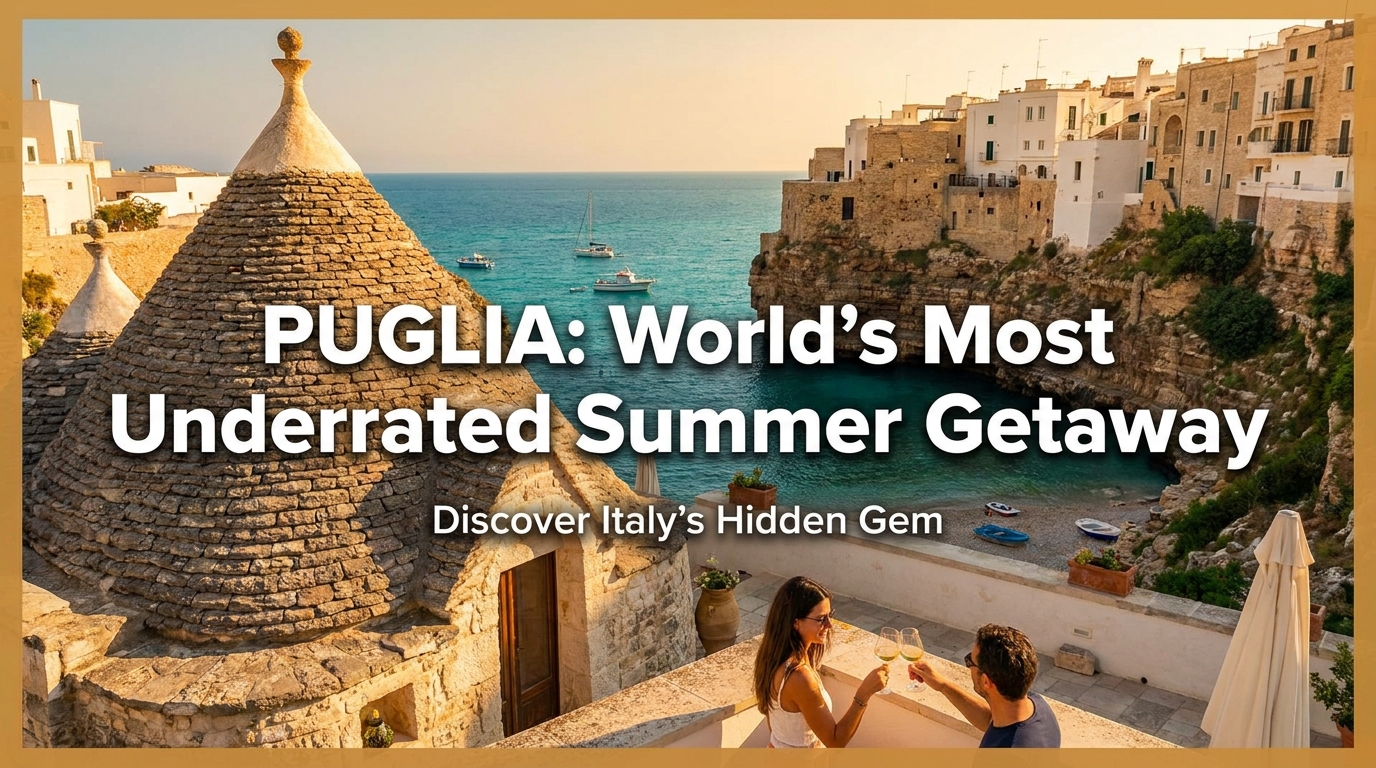


Puglia, Italy, has been ranked the world’s most underrated summer destination, beating Okinawa, Sardinia and Busan in a new travel analysis. The southern Italian region stood out for its turquoise coastline, whitewashed towns, historic architecture, warm weather and comparatively manageable visitor numbers.
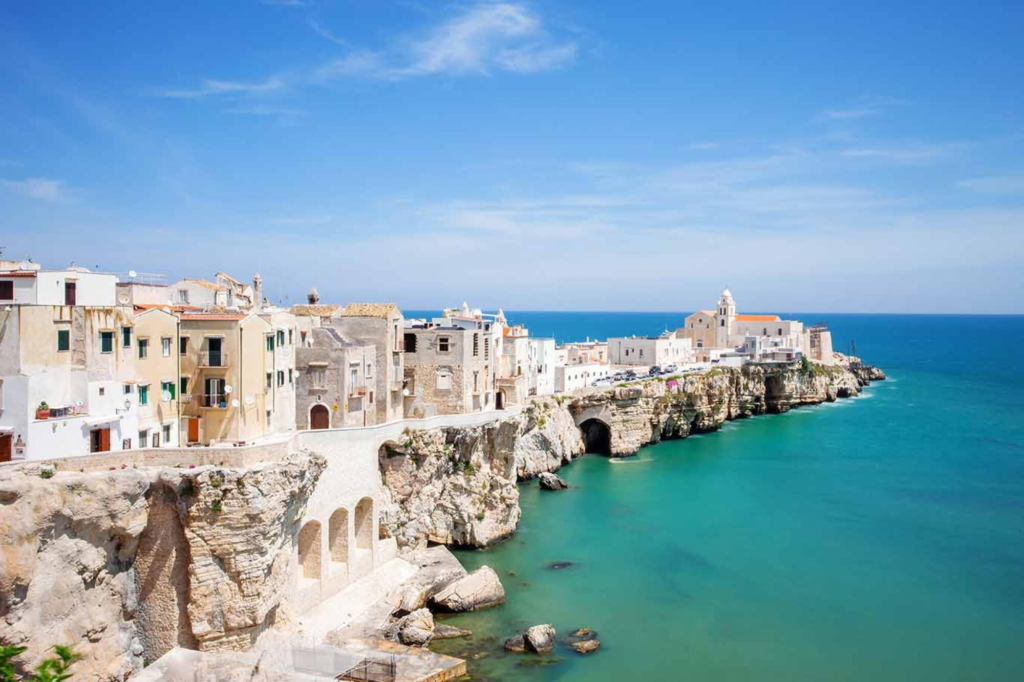
The result will not surprise travellers who have explored Italy’s heel beyond its busiest beach clubs. Puglia offers the visual drama people expect from the Amalfi Coast, but spreads it across fishing towns, rural estates, olive groves and two distinct coastlines.
Its biggest advantage, however, is not simply that it is “less crowded.” Puglia gives travellers several different holidays within one region: swimming beneath limestone cliffs, sleeping in a converted farmhouse, exploring conical stone houses and eating fresh pasta in a quiet village square.
Why Was Puglia Named the Most Underrated Summer Destination?
Puglia ranked first because it combined strong visual appeal with beaches, cultural attractions, accommodation options and lower visitor pressure than many famous Italian destinations.
The analysis examined more than 50 lesser-known places using factors including:
- Instagram visibility
- Annual visitor numbers
- Typical summer weather
- Number of attractions
- Hotel availability and prices
- Guest ratings
- Popularity as an alternative to overcrowded destinations
Puglia recorded more than 16.2 million Instagram posts, approximately 6.7 million annual visitors, around 1,536 attractions and more than 830 hotels available for a sample week-long June stay. The study estimated average accommodation costs of about $639 for that week, although real prices will change according to the town, property type and booking date.
The Important Detail the Ranking Does Not Tell You
“Underrated” does not mean empty. Polignano a Mare, Alberobello and the most famous Salento beaches can become extremely busy during July and August.
The ranking also relies partly on social-media activity, which measures visibility rather than the complete quality of a destination. Treat the result as a useful discovery signal, not an objective declaration that Puglia is better than every other summer destination.
Travellers seeking quieter streets should visit in late May, June, September or early October, or stay outside the headline towns and enter them early in the morning.
What Makes Puglia Different From Other Italian Summer Destinations?
Puglia feels less like one resort area and more like a chain of distinct local worlds. Its Adriatic side has cliff-backed towns and rocky coves, while southern and western areas open onto sandy beaches and the Ionian Sea.
The region’s official tourism portal highlights its combination of cultural heritage, coastal landscapes, food traditions and historic settlements.
A well-planned trip can include:
- Bari for old-town street life and transport connections
- Polignano a Mare for dramatic cliffs and sea views
- Monopoli for a more relaxed harbour-town base
- Alberobello for its UNESCO-listed trulli
- Ostuni for whitewashed lanes and hilltop views
- Lecce for elaborate historic architecture
- Salento for beaches, swimming and slower evenings
The mistake is trying to see all of them in three days. Puglia looks compact on a map, but road conditions, parking and summer traffic make rushed itineraries tiring.
Also read – World Air Transport Statistics 2025 Released By IATA
Is Polignano a Mare Worth Visiting?
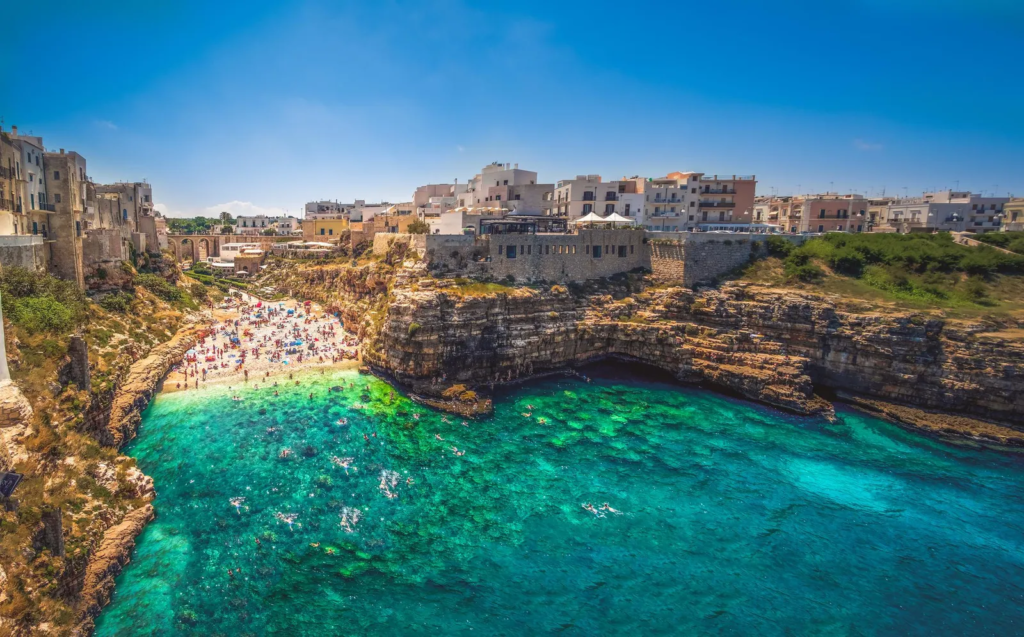
Polignano a Mare is worth visiting for its cliff-top old town, sea caves and striking coastal views, but it should not be treated as a quiet beach escape during peak summer.
Lama Monachile, the narrow cove shown in countless photographs, is beautiful but small. Arriving after mid-morning in July or August often means competing for very limited space.
A better plan is to:
- Walk through the old town before breakfast crowds arrive
- View Lama Monachile from the bridge before going down
- Swim at a nearby cove rather than relying on the central beach
- Return in the evening for dinner and a waterfront walk
For travellers wanting clearer water with slightly more breathing room, the official Puglia tourism portal describes Ponte dei Lapilli as a pebble beach between rocky ridges near Polignano.
Practical tip: Wear water shoes. Many Puglian swimming spots have pebbles, rock shelves or slippery entry points rather than soft sand.
Why Is Alberobello Famous?
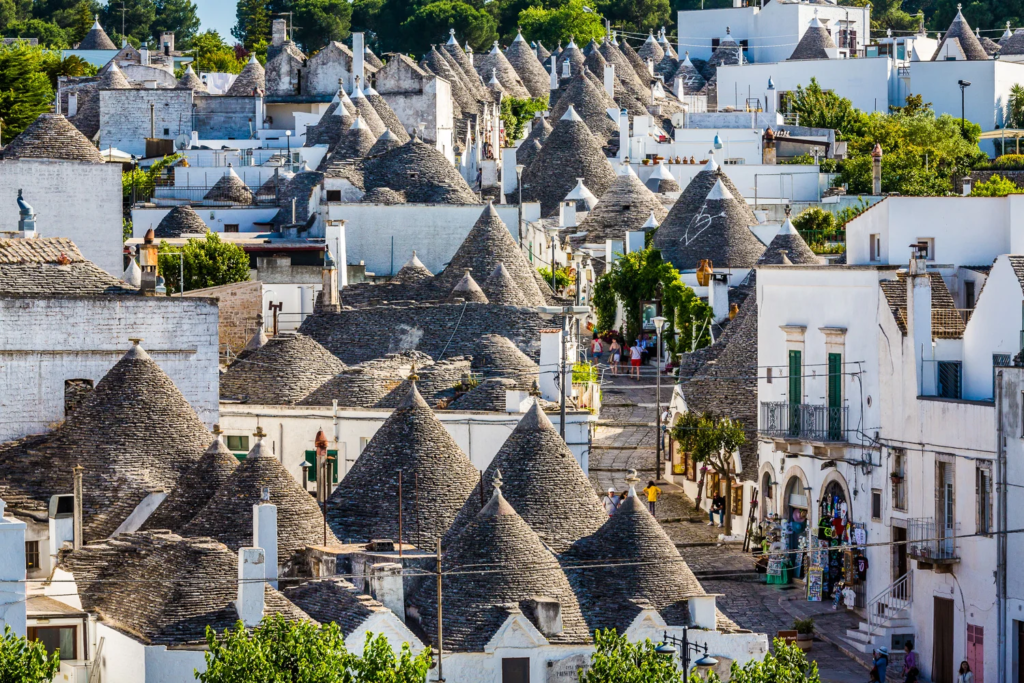
Alberobello is famous for its trulli, traditional limestone buildings with conical roofs constructed using dry-stone techniques.
UNESCO describes the buildings as exceptional examples of a construction method with ancient roots that remains part of the region’s architectural identity. Some surviving structures date from at least the mid-14th century.
The town is memorable, but timing determines the experience.
How to Visit Alberobello Without the Worst Crowds
- Arrive before 9 a.m. or stay until early evening
- Explore beyond the busiest souvenir streets
- Visit residential areas quietly and respect private homes
- Avoid photographing residents through doors or windows
- Consider staying overnight in a restored trullo
The official Alberobello visitor site also points travellers towards Bosco Selva, a roughly 40-hectare city park with walking paths and picnic facilities. It is a useful escape when the historic centre becomes crowded.
Where Should You Stay in Puglia?
Choose your Puglia base according to the experience you want, not simply the cheapest hotel result.
| Best base | Best for | Main limitation |
|---|---|---|
| Bari | Short trips, trains, food and airport access | Busy and urban |
| Monopoli | Beaches, harbour evenings and day trips | Parking can be difficult |
| Ostuni countryside | Masserie, quiet stays and road trips | A car is usually helpful |
| Lecce | Architecture, restaurants and southern Puglia | Not directly on the beach |
| Otranto | Coastal atmosphere and Salento access | Very busy in peak summer |
| Alberobello area | Trulli stays and Valle d’Itria villages | Less convenient for beach-focused trips |
For a first visit of five to seven nights, splitting the trip between Monopoli or the Valle d’Itria and Lecce or southern Salento is more practical than changing hotels every night.
A Booking Detail That Can Save the Trip
Check whether your accommodation includes private parking before confirming it. Historic centres often have restricted traffic zones, narrow lanes and limited legal parking.
Do not assume that “parking nearby” means a reserved space. Ask the property for:
- The exact parking location
- The daily charge
- Whether advance reservation is needed
- Whether the route enters a restricted traffic zone
- How far luggage must be carried
Do You Need a Car in Puglia?
A car is useful for beaches, countryside stays and smaller villages, but it is not essential for a simple Bari-to-Lecce coastal itinerary.
Bari, Polignano a Mare, Monopoli, Ostuni and Lecce can be connected through regional rail services, although some stations are outside the historic centre. Rural masserie, secluded coves and inland villages are considerably easier to reach by car.
Puglia’s main passenger gateways are Bari and Brindisi airports, both managed within the regional airport network. Bari works well for central and northern Puglia, while Brindisi is often more convenient for Lecce and Salento.
Should You Rent a Car in Puglia?
Rent a car when:
- You are staying in the countryside
- You want to explore several small villages
- Your priority is finding quieter beaches
- You are travelling with children or heavy luggage
Skip the car when:
- You are staying in central Bari or Lecce
- You only want major coastal towns
- You dislike narrow roads and difficult parking
- Your itinerary is built around train-accessible places
Do not leave luggage visible inside a parked vehicle, especially at beaches or roadside viewpoints. Carry valuables with you and choose staffed parking where possible.
What Should You Eat in Puglia?
Puglia’s food is built around simple ingredients that taste different because they are deeply tied to the region.
Look for:
- Orecchiette, often served with broccoli rabe
- Focaccia barese, softer and thicker than many northern versions
- Burrata, traditionally associated with Andria
- Panzerotti, fried dough filled with tomato and cheese
- Tiella barese, baked rice, potatoes and mussels
- Pasticciotto, a custard-filled pastry popular around Lecce
- Fresh seafood in coastal towns
A useful sign is a short menu that changes according to the day’s catch or available produce. Restaurants beside the most photographed squares can be convenient, but walking two or three streets inland often produces a calmer meal and more local atmosphere.
What Should Travellers Avoid in Puglia?
Avoid treating Puglia as an unlimited supply of empty beaches and secret villages. Its popularity is growing, and careless planning can turn a relaxed trip into a daily search for parking and shade.
Common mistakes include:
- Visiting every famous town between 11 a.m. and 4 p.m.
- Booking a remote countryside property without transport
- Assuming every beach is sandy
- Driving into restricted historic zones
- Arriving at popular beach clubs without reservations
- Planning long outdoor walks during the hottest part of the day
- Spending only one night in each location
The smarter rhythm is simple: explore early, rest during the hottest hours and return outside in the evening. It matches local summer life and produces a much better experience than forcing a packed sightseeing schedule.
The 10 Most Underrated Summer Getaways in the Ranking
| Rank | Destination | Reported Instagram presence |
|---|---|---|
| 1 | Puglia, Italy | 16.2 million |
| 2 | Okinawa, Japan | 14 million |
| 3 | Sardinia, Italy | 9.6 million |
| 4 | Busan, South Korea | 5.1 million |
| 5 | Gdańsk, Poland | 4.8 million |
| 6 | Turin, Italy | 4.4 million |
| 7 | Cappadocia, Türkiye | 3.6 million |
| 8 | Nara, Japan | 3.5 million |
| 9 | Menorca, Spain | 3.4 million |
| 10 | La Paz, Mexico | 2.9 million |
The figures were reported as part of the wider destination analysis.
Is Puglia Really Worth Visiting in Summer?
Puglia is worth visiting in summer when the trip is planned around heat, transport and crowd patterns rather than social-media photographs.
Come for the coastal scenery, but leave room for slow breakfasts, countryside drives, quiet churches, village markets and evenings when residents return to the streets after the temperature drops.
Puglia’s appeal is not that nobody knows about it. That era has already passed in places such as Polignano a Mare and Alberobello. Its real advantage is that travellers can still move beyond the famous view and find a different side of the region within a short drive or train ride.
That makes Puglia more than an underrated beach destination. It makes it one of Italy’s most flexible summer trips.