


America’s next big travel trend is not simply visiting more national parks. It is choosing places where local people, living history, food, culture, and community stories become the reason for the trip.
That message emerged during the America 250: The Future of Domestic Travel discussion at Travel + Leisure’s World’s Best Summit in New York City on July 15, 2026. Travel leaders said the United States’ 250th anniversary is encouraging visitors to look beyond famous landmarks and seek more meaningful connections with the places they visit.
For travelers, the shift is practical. A successful U.S. trip in 2026 is less about collecting attractions and more about understanding where the tourism money goes, whose history is being told, and whether the experience feels connected to the destination.
What Is Changing in U.S. Domestic Travel in 2026?
Domestic travelers are taking shorter, more intentional trips and paying closer attention to local experiences.
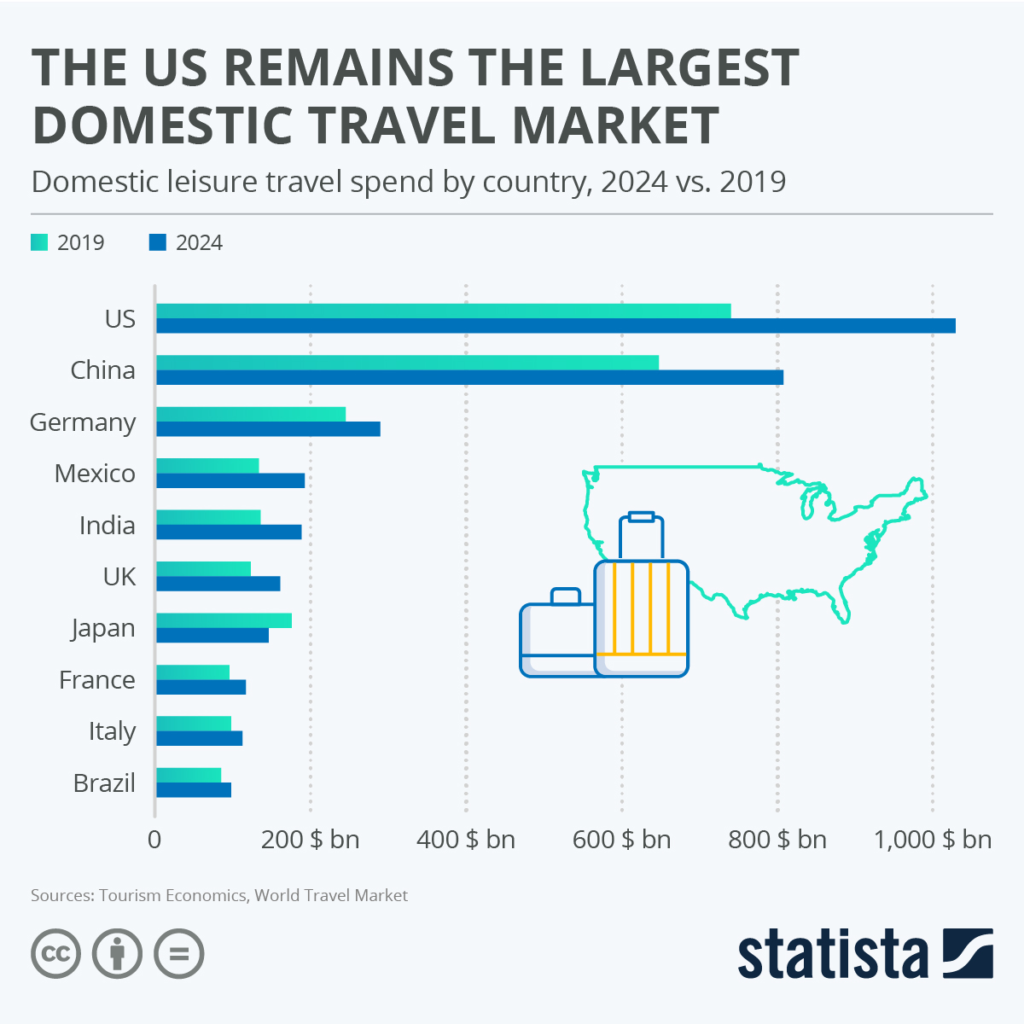
The latest U.S. Travel Association forecast projects domestic leisure travel spending will rise by 0.9% to $909 billion in 2026. The growth is modest because higher prices are pushing many Americans toward regional, lower-cost and shorter-duration trips. Domestic travel still accounts for about 87% of total U.S. travel spending.
| 2026 domestic travel signal | What it means for travelers |
|---|---|
| Shorter trips are growing | Three-night regional breaks may replace long, expensive vacations |
| Drive destinations remain important | Towns within a few hours of major cities can attract more visitors |
| Travelers want local connection | Workshops, food tours and community-led experiences gain value |
| History tourism is expanding | Visitors want fuller stories, not polished versions of the past |
| Spending is more selective | Travelers may pay more for one memorable experience and cut routine extras |
The strongest destinations will therefore be places that can answer a simple question: What can a visitor experience here that cannot be copied somewhere else?
Why Local Communities Will Shape the Future of American Travel
Travelers increasingly want their trip to benefit the people who actually live in the destination.
Hotelier Sheila Johnson, co-founder of BET and founder of the Salamander Collection, told summit attendees that hospitality should help rebuild and strengthen communities. Her Salamander Middleburg property in Virginia reportedly contributes around $1.8 million to the local community each year and employs about 500 people in a town of roughly 760 residents.
Those numbers reveal something travelers rarely consider while booking: two similar-looking hotels can create very different local impacts.
A locally connected property may:
- Employ residents throughout the year
- Purchase food, flowers and services from nearby businesses
- Recommend independent guides instead of generic attractions
- Preserve local architecture and traditions
- Give visitors a clearer understanding of the region
How can travelers tell whether a hotel supports the local community?
Ask specific questions before booking. A hotel’s sustainability page may sound impressive without explaining what happens on the ground.
Look for clear evidence:
- Who owns or operates the property?
- How many employees live locally?
- Does the restaurant buy from regional farms and fisheries?
- Are local artists represented in rooms and public spaces?
- Can guests book tours led by residents or cultural organizations?
- Does the hotel contribute to community projects throughout the year?
A useful test is to examine the hotel’s recommendations. A list filled entirely with national chains and heavily promoted attractions suggests a weak local connection. A thoughtful guide naming family-owned restaurants, neighborhood museums and independent craftspeople is a better sign.
Alaska’s Icy Strait Point Shows What Community-Led Tourism Looks Like
Icy Strait Point offers a clear example of tourism designed and operated by the community whose culture visitors have come to experience.
The Alaska Native-owned destination near Hoonah is operated by Huna Totem Corporation. Local participation extends across the visitor experience, from shops selling handmade art to restaurants serving Alaska seafood. Russell Dick, president and CEO of Huna Totem Corporation, explained that the aim is not simply to entertain guests but to help them understand Alaska Native identity, values and subsistence traditions.
That distinction matters.
A visitor can leave Alaska with photographs of mountains and wildlife while learning almost nothing about the people who have lived there for generations. Community-led tourism closes that gap by allowing residents to decide how their culture is presented.
What should travelers do at an Indigenous-owned destination?
Treat the experience as a cultural exchange, not a staged attraction.
- Listen before taking photographs
- Ask permission when photographing people, ceremonies or artwork
- Buy authentic work directly from recognised local makers
- Avoid bargaining aggressively over handmade items
- Choose locally operated tours when available
- Read about the community before arriving
- Do not assume every resident wants to discuss personal or historical trauma
The best moments are often small. A conversation about how salmon is prepared, why a carving carries a particular symbol, or how seasonal weather affects daily life may stay with a traveler longer than the headline activity.
America’s 250th Anniversary Is Making History Tourism More Honest
Historic destinations are expanding beyond familiar patriotic stories to include Black, Indigenous, women’s and LGBTQ+ experiences.
Colonial Williamsburg, often described as the world’s largest living history museum, is widening its interpretation of the American Revolution and early American democracy. Its programming includes the experiences of African Americans and Indigenous people, presenting a fuller account of the period rather than limiting the story to prominent political figures.
The New York Historical is taking a similar approach through exhibitions covering more than 400 years of American history. Its recent themes include women in the American Revolution and queer life and culture.
This approach does not weaken historical travel. It makes the experience more useful.
Visitors understand a place more clearly when they learn:
- Who held power
- Who was excluded
- Who performed the labour
- Whose land was occupied
- How laws affected everyday families
- Which arguments from the past remain unresolved today
How should travelers visit a historic site in 2026?
Do not rush through the buildings and skip the interpretation.
Use this simple method:
- Take the guided tour first. It gives context that signs cannot always provide.
- Ask whose perspective is missing. This often leads to the most revealing conversation.
- Read at least one primary source. A letter, diary, newspaper or legal document makes history feel less abstract.
- Visit the surrounding town. Historic districts are not isolated sets. Their food, streets and communities are part of the story.
- Allow more time than the website suggests. Two hours can easily become half a day when demonstrations, talks and temporary exhibitions are included.
A practical tip is to choose the earliest guided tour. Groups are often smaller, interpreters have more time for questions, and summer heat is usually less intense.
National Parks Will Remain Popular, but They Are No Longer the Whole Story
National parks remain central to American tourism, but travelers are expanding their idea of what an outdoor or heritage trip can include.
A national park itinerary becomes more memorable when it includes communities outside the entrance gate. Instead of driving directly from an airport to the park and eating only inside the tourism corridor, travelers can add:
- Tribal cultural centres
- Local conservation projects
- Historic railway towns
- Independent outdoor guides
- Regional food producers
- Small museums explaining the surrounding landscape
- State parks and lesser-known public lands
This also helps reduce pressure on the most crowded locations.
For example, a trip centred on a major park might include one popular viewpoint, one ranger-led activity, one locally guided experience and one nearby town. That mix creates a fuller trip than spending three days moving between congested overlooks.
What Do Travelers Actually Want From a U.S. Vacation in 2026?
Travelers want experiences they can participate in, not simply observe.
American Express Travel’s 2026 Global Travel Trends research found that 79% of surveyed Millennials and Gen Z travelers were likely to seek destination-specific workshops or activities. It also found that 82% believed learning a skill while traveling made the trip more memorable.
That may involve:
- Learning regional cooking techniques
- Joining a pottery, weaving or carving workshop
- Taking a neighbourhood history walk
- Visiting a working ranch
- Learning about local wildlife with a naturalist
- Joining a harvest, tasting or fishing experience
- Attending a community festival rather than a tourist performance
The key is participation. A visitor who spends an hour making something, listening to a resident’s story or learning a local skill gains a memory that cannot be recreated by scrolling through photographs later.
How to Plan a Better Domestic U.S. Trip
Build the itinerary around one meaningful local experience, then add the major sights.
Many travelers plan in the opposite order. They collect landmarks first and attempt to fit local culture into whatever time remains. That usually produces a rushed trip filled with parking, queues and check-in times.
A stronger planning sequence is:
1. Choose the reason for the trip
Decide what you want to understand or feel.
Examples:
- Learn how one American city shaped music
- Explore Indigenous culture responsibly
- Understand the Revolutionary period beyond famous names
- Spend time in a rural food-producing region
- Disconnect at a ranch or wilderness lodge
- Support a town recovering from economic or natural disruption
2. Find a locally led anchor experience
Book one workshop, guided walk, cultural visit or community-run tour early. These experiences may operate only on selected days and often have smaller capacities than major attractions.
3. Stay long enough to notice the destination
A one-night stay rarely leaves room for anything beyond arrival, dinner and departure. Three nights is often the practical minimum for a place you genuinely want to understand.
4. Leave one half-day unplanned
The unplanned time is where travelers often find the neighbourhood café, local market, riverside walk or unexpected conversation they remember most.
5. Check where your money is going
Try to divide spending across several local businesses instead of putting the entire budget into one resort or booking platform.
What Should Travelers Avoid in 2026?
Avoid treating “authentic” as a product label.
Experiences do not become meaningful simply because a listing uses words such as local, hidden, cultural or immersive.
Watch for these warning signs:
- Cultural tours with no named local guide
- “Traditional” products made outside the region
- Wildlife encounters that allow touching or forced interaction
- Historic attractions that present only one viewpoint
- Restaurants claiming local sourcing without naming suppliers
- Tours that enter residential areas without community participation
- Overpacked itineraries that leave no time to speak with anyone
Also avoid assuming expensive means locally beneficial. A luxury stay may strongly support its community, while another may import most goods and profits. Price alone tells travelers very little.
Why Domestic Travel Matters More to the U.S. Economy Now
Domestic visitors are carrying most of the U.S. travel economy while international tourism remains under pressure.
The World Travel & Tourism Council reported that the United States remained the world’s largest travel and tourism market in 2025, contributing $2.63 trillion to GDP and supporting 20.4 million jobs. Domestic visitor spending remained strong at approximately $1.54 trillion, even as international visitor numbers declined.
This gives destinations a strong reason to invest in experiences that encourage Americans to explore closer to home.
The opportunity is not limited to New York, Florida, California or famous national parks. Smaller towns can compete when they offer a clear identity, easy access, strong local storytelling and experiences visitors cannot find in a shopping district beside an interstate.
The Future of U.S. Travel Is Personal, Local and More Honest
America’s 250th anniversary is turning domestic travel into a deeper examination of the country, its communities and its unfinished history.
The strongest U.S. trips in 2026 will still include beaches, theme parks, national parks, luxury hotels and famous cities. But the experiences travelers remember most may be quieter: hearing a Native guide explain the importance of fishing traditions, speaking with an interpreter at a living history museum, eating food grown a few miles away, or learning why a hotel matters to the town around it.
The practical lesson is simple: do not only ask what there is to see. Ask who can help you understand it.
That question leads to better trips, better stories and travel spending that reaches beyond the attraction gate.
Frequently Asked Questions About U.S. Domestic Travel in 2026
What is the biggest U.S. travel trend in 2026?
The biggest trend is intentional, locally connected travel. Visitors are combining famous attractions with community-led food, history, arts and outdoor experiences.
Will domestic travel increase in 2026?
Yes, but growth will be moderate. U.S. Travel Association forecasts domestic leisure spending to rise 0.9% in inflation-adjusted terms during 2026.
How is America’s 250th birthday affecting tourism?
It is increasing interest in U.S. history while encouraging museums and historic destinations to tell broader, more accurate stories about the country’s founding and development.
Are national parks still worth visiting in 2026?
Yes. Travelers should book early, visit popular areas outside peak hours and combine the park with nearby community, cultural and historical experiences.
How can travelers support local communities?
Book locally owned accommodation and tours, eat at independent restaurants, purchase authentic regional products and spend enough time in the destination to explore beyond major attractions.